


Buying a piece of jewelry is incredibly exciting, but nothing ruins the moment faster than a band that slips right off your knuckle or pinches your skin. Whether you are shopping for a wedding band, a milestone piece, or preparing for a surprise proposal, knowing how to find your ring size is the critical first step to a flawless purchase. A proper fit ensures your jewelry stays secure and feels completely natural during daily wear.
At Antiquecut, we want to make sure your shopping experience is completely stress-free. You do not need to make a special trip to a retail store just to get a measurement. With a few basic household items or a dedicated tool, you can determine your exact dimensions with total confidence.
Why Ring Size Accuracy Matters
When a band fits correctly, it glides over the knuckle with a slight amount of resistance but sits comfortably at the base of your finger. It should feel snug enough that it will not fall off when your hands are cold, but loose enough to accommodate normal daily swelling.
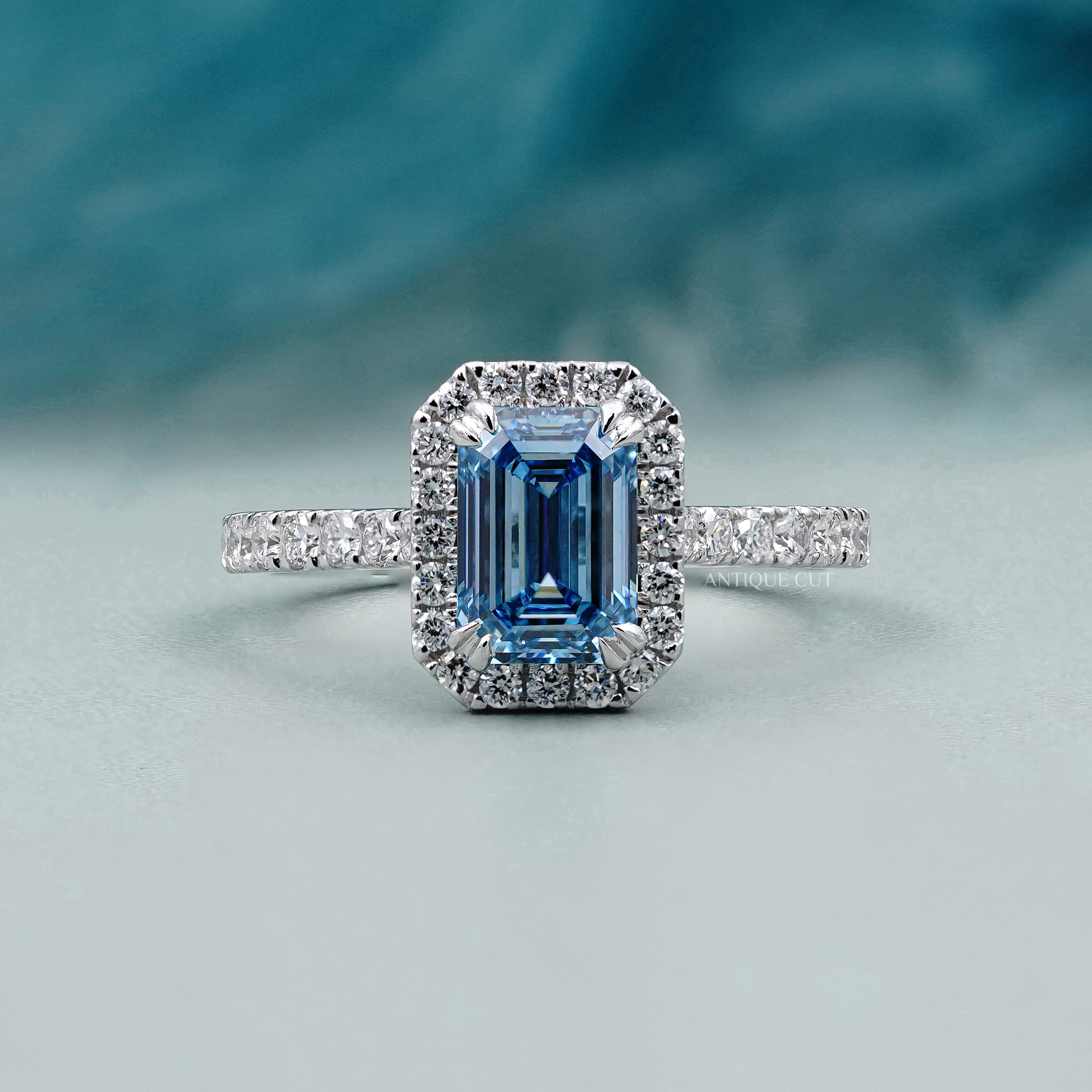
If a piece of jewelry, such as a hidden halo diamond ring, is too loose, you risk losing it during everyday activities like washing your hands, exercising, or reaching into your pockets. On the other hand, a band that is too tight can restrict blood flow, cause discomfort, and become difficult to remove at the end of the day. While many rings can be resized by a jeweler, certain styles including a hidden halo diamond ring with intricate settings, full eternity bands, vintage-inspired designs, or rings made from alternative metals like tungsten can be difficult or even impossible to resize without affecting their original craftsmanship. Taking the time to measure your ring size accurately from the start helps you avoid unnecessary costs, inconvenience, and disappointment.
Universal Factors That Alter Your Finger Measurements
Your fingers change shape and size constantly throughout the day due to various internal and external influences. Before you begin measuring, keep these critical environmental variables in mind:

Method 1: How to Find Your Ring Size with String
One of the easiest methods requires only a piece of string or paper.
Step 1
Wrap the string around the base of your finger.
Step 2
Mark where both ends meet.
Step 3
Lay the string flat and measure its length using a ruler.
Step 4
Compare the measurement with a ring size chart.
This method works well when performed carefully, although measuring several times improves accuracy.
Method 2: Use a Printable Ring Size Chart
A printable ring size chart is one of the most popular ways to determine ring measurements.
Steps
- Print the chart at 100% scale.
- Verify the printed measurement using the reference line.
- Place an existing ring over the printed circles.
- Match the inside edge of the ring with the closest circle.
If the ring falls between two sizes, choosing the larger size generally provides a more comfortable fit.
Method 3: Measure an Existing Ring
If you already own a ring that fits perfectly, measuring it can provide an accurate result.
How to Measure
- Place the ring on a ruler.
- Measure the inside diameter.
- Compare the diameter with a ring size chart.
This method works especially well when buying another ring for the same finger.
Method 4: Use a Ring Sizer Tool
A ring sizer tool offers one of the most reliable ways to measure your finger.
Most ring sizers are reusable plastic measuring bands that work similarly to a belt.
Steps
- Insert the end through the buckle.
- Slide the loop over your finger.
- Tighten until comfortable.
- Read the indicated size.
Many jewelers also provide a reusable ring sizer for home use.
Understanding Standard US Ring Sizes
In the United States and Canada, jewelry dimensions are calculated using a specific numerical scale that corresponds directly to the inner diameter and circumference of the band. These numbers typically range from size 3 to size 13 for adults. Whether you're shopping for a delicate band or 3 to 5 Carat Lab Grown Diamond Rings, knowing your correct ring size is essential to ensure a secure and comfortable fit, especially for larger center stones that deserve proper support.
Each full size represents an increase of roughly 0.8 millimeters in inner diameter, which equals about 2.5 millimeters in total inner circumference. To accommodate the subtle differences in finger shapes, manufacturers also create half and quarter steps. For example, if a size 6 is slightly too tight but a size 7 slides around completely, a size 6.5 or 6.75 will likely provide the exact balance you need.
Standard US Ring Size Chart
Use this comprehensive reference data to translate your physical millimeter measurements into official retail dimensions.
| US Size | Inside Diameter (mm) | Inside Circumference (mm) |
|---|---|---|
| 3 | 14.1 mm | 44.2 mm |
| 4 | 14.9 mm | 46.8 mm |
| 5 | 15.7 mm | 49.3 mm |
| 6 | 16.5 mm | 51.8 mm |
| 7 | 17.3 mm | 54.4 mm |
| 8 | 18.2 mm | 56.9 mm |
| 9 | 19.0 mm | 59.5 mm |
| 10 | 19.8 mm | 62.1 mm |
| 11 | 20.6 mm | 64.7 mm |
| 12 | 21.4 mm | 67.2 mm |
| 13 | 22.2 mm | 69.7 mm |
Common Mistakes When Measuring Ring Sizes
Avoid these common errors:
Measuring Cold Fingers
Cold temperatures shrink fingers and can result in selecting a smaller size.
Ignoring Finger Swelling
Warm weather, physical activity, and hydration can slightly increase finger size.
Pulling the String Too Tight
The string should rest naturally around your finger.
Pulling it tightly often results in choosing a ring that feels uncomfortable.
Using Stretchy Materials
Use paper or non-stretch string for more accurate measurements.
Tips for Measuring a Partner's Finger in Secret
Planning a surprise proposal is a beautiful gesture, but discovering their size without giving away the secret requires some creativity. Here are a few discreet ways to get the information you need:
- Borrow an Existing Piece: Sneak into their jewelry box and borrow a piece they wear frequently on their ring finger or middle finger. Trace the inside circle onto a piece of paper, or press the jewelry firmly into a bar of soap to create a perfect physical mold that you can take to a professional.
- Enlist a Trusted Friend: Ask one of their close friends or family members to take them shopping for fun, or have them casually bring up jewelry choices in conversation to gather details without raising suspicion.
- Compare Fingers: While holding your partner's hand, notice if their ring finger matches the size of one of your smaller fingers or knuckles. This provides a rough estimation that a jeweler can work with as a fallback option.
-
The Sleep Method: If your partner is an incredibly deep sleeper, you can carefully wrap a soft piece of string around their finger while they rest, marking the overlap spot gently.
Best Seller Rings
Conclusion
Learning how to find your ring size is not difficult, but it does require care. A careful measurement saves time, improves comfort, and makes ring shopping much easier. Whether you use a ring size chart, a ring sizer, or a ring sizer tool, the key is to measure in a thoughtful way and confirm the result more than once. The right size supports everyday wear and helps the ring feel as good as it looks.
FAQs
1. What is the easiest way to find your ring size at home?
The easiest way is to use a ring sizer tool or measure your finger with a strip of paper or string and compare the measurement to a ring size chart. Measuring two or three times helps improve accuracy.
2. How accurate is a printable ring size chart?
A printable ring size chart can be accurate if it is printed at 100% scale without resizing. Always verify the print scale before using it for measurements.
3. Can I use a string to measure my ring size?
Yes. Wrap a non-stretch string around the base of your finger, mark where it overlaps, measure the length in millimeters, and match it to a ring size chart.
4. When is the best time to measure your ring size?
The best time is in the evening when your fingers are at their normal size. Avoid measuring when your hands are very cold or immediately after exercise.
5. Do ring sizes change over time?
Yes. Ring sizes can change due to temperature, weight changes, hydration, pregnancy, or natural aging. It's a good idea to measure again before purchasing a new ring.
6. Should I choose a larger size for a wide ring band?
Yes. Wide bands often feel tighter than thin bands, so many people find it more comfortable to choose a slightly larger size.
7. What is a ring sizer tool?
A ring sizer tool is a measuring device designed to help determine your correct ring size. It is available as adjustable measuring strips or sets of sizing rings and provides more accurate results than string or paper.
8. Can I measure a ring instead of my finger?
Yes. If you already have a ring that fits well, measure its inside diameter and compare it with a ring size chart to identify the correct size.
9. Are ring sizes the same in every country?
No. Ring sizing systems vary between the US, UK, Europe, and other regions. Always check the retailer's size conversion chart before ordering.
10. How can I find someone else's ring size without asking?
You can borrow a ring they already wear on the correct finger and measure it using a ring size chart or a ring sizer tool. If that's not possible, ask a close friend or family member if they know the person's size.


