


Lab grown diamonds are real diamonds. They have the same fundamental crystal structure and chemical composition as natural diamonds. Their primary distinction is their origin: natural diamonds form through geological processes, while lab grown diamonds are produced using controlled technological processes.
For buyers considering an engagement ring, earrings, pendant, or other diamond jewelry, the lower purchase price of a lab grown diamond can provide more flexibility. However, price alone does not determine whether a diamond is worth buying.
Antiquecut is one example of a jewelry brand that offers lab grown diamond jewelry, giving buyers another option when comparing diamond shapes, settings, certifications, and designs. In 2026, the more useful question is not simply whether lab grown diamonds are cheaper. It is whether their quality, appearance, price, and intended use match what you want from a diamond.


Why Lab Grown Diamonds Can Be Worth It in 2026
There are several reasons buyers continue to consider laboratory-grown diamonds.
1. More Diamond for a Fixed Budget:
The most obvious financial advantage is that laboratory-grown diamonds generally cost less than comparable natural diamonds. This can allow buyers to allocate their budget differently. For example, someone with a fixed engagement-ring budget could potentially choose:
- A larger center diamond
- A higher color grade
- Higher clarity
- A more detailed setting
- Additional side diamonds
- A different precious metal
This is particularly relevant for buyers looking at lab grown diamond engagement rings, where the center stone often represents a significant part of the total cost. However, lower price does not automatically mean better value. The specifications still need to be evaluated carefully.
2. A Wide Range of Diamond Shapes;
Laboratory-grown diamonds are available in many popular shapes. These include:
This gives buyers considerable flexibility when choosing a ring. An oval diamond can provide an elongated appearance, while a cushion cut offers rounded corners. Emerald cuts have broad step facets, making clarity and proportions particularly important.
3. Suitable for Regular Jewelry Wear:
Diamond is one of the hardest naturally occurring materials, and lab-grown diamonds share the fundamental crystal structure responsible for diamond's hardness. This makes them suitable for engagement rings and other jewelry intended for frequent wear.
However, hardness does not make a diamond impossible to damage. A sharp impact can still cause chipping, especially around exposed corners or pointed areas. The quality and construction of the setting therefore remain important.
4. Easier Budget Planning:
Because laboratory-grown diamonds are generally priced below comparable natural diamonds, buyers can establish a total budget and decide where to allocate their money. A buyer might prioritize:
| Priority | Where the Budget Could Go | |
|---|---|---|
| Larger center stone | Carat and measurements | |
| Better visual performance | Cut and proportions | |
| Whiter appearance | Color | |
| Cleaner appearance | Clarity | |
| Detailed design | Setting and accent diamonds | |
| Durability | Metal and setting construction | |
| Documentation | Independent grading |
This flexibility is one of the strongest arguments in favor of lab-grown diamonds.
Lab Grown Diamonds Pros and Cons
The lab grown diamonds pros and cons can be easier to evaluate when they are separated into practical considerations.
Pros of Lab Grown Diamonds
1. Lower Initial Cost:
One of the most noticeable advantages is pricing. Comparable lab grown and natural diamonds can have significantly different prices, giving buyers more room within a fixed budget.
This can be especially useful when purchasing lab grown diamond engagement rings. A buyer with a specific budget may be able to consider a larger center diamond or a more detailed setting.
2. Wide Range of Shapes:
Lab grown diamonds are available in many popular shapes, including:
- Round
- Oval
- Cushion
- Emerald
- Radiant
- Pear
- Marquise
- Princess
- Asscher
This gives buyers plenty of design options.
3. Real Diamond Material:
Lab grown diamonds are not simply diamond-looking alternatives. They are diamonds with the same basic crystal structure and chemical composition as natural diamonds. This makes them different from simulants such as cubic zirconia.
4. More Budget Flexibility:
A lower purchase price can allow you to divide your budget differently. For example, you could prioritize:
- A larger center stone
- A higher color grade
- A higher clarity grade
- A more detailed setting
- A different precious metal
- Additional accent diamonds
The right choice depends on which characteristics matter most to you.
Cons of Lab Grown Diamonds
1. Resale Can Be a Concern:
One of the most important considerations is lab grown diamond resale value. Diamonds generally should not be purchased with the assumption that they will function like a guaranteed investment.
Lab grown diamonds can experience significant price changes as production technology, supply, consumer demand, and market conditions change. If you plan to resell a diamond later, the amount you receive may be substantially lower than your original purchase price.
2. Prices Can Change:
The market for lab grown diamonds has developed rapidly. Production improvements and increased availability can influence retail pricing. This means someone purchasing a lab grown diamond should consider the jewelry as a purchase for its intended use rather than assuming that today's price will remain unchanged.
3. Origin Matters to Some Buyers:
Some people specifically want a natural diamond because they value its geological origin. For those buyers, a lab grown diamond may not provide the type of ownership experience they are seeking. This is a personal preference rather than a question of whether one material is real.
Lab Grown Diamonds vs Real Diamonds: What Is the Difference?
The phrase lab grown diamonds vs real diamonds can create confusion because lab grown diamonds are themselves real diamonds. A more accurate comparison is lab grown diamonds vs natural diamonds.
| Feature | Lab Grown Diamonds | Natural Diamonds |
|---|---|---|
| Basic Material | Diamond | Diamond |
| Crystal Structure | Diamond crystal structure | Diamond crystal structure |
| Origin | Laboratory production | Geological formation |
| Common Shapes | Round, oval, cushion, etc. | Round, oval, cushion, etc. |
| Grading | Laboratory reports available | Laboratory reports available |
| Initial Price | Generally lower for comparable specifications | Generally higher for comparable specifications |
| Resale Consideration | Can be limited | Also varies considerably |
| Jewelry Use | Rings, earrings, necklaces, etc. | Rings, earrings, necklaces, etc. |
| Main Difference | Origin | Origin |
Both types can be cut, polished, graded, and placed into fine jewelry. The difference lies primarily in how the diamond forms.
Are Lab Grown Diamonds Worth It for an Engagement Ring?


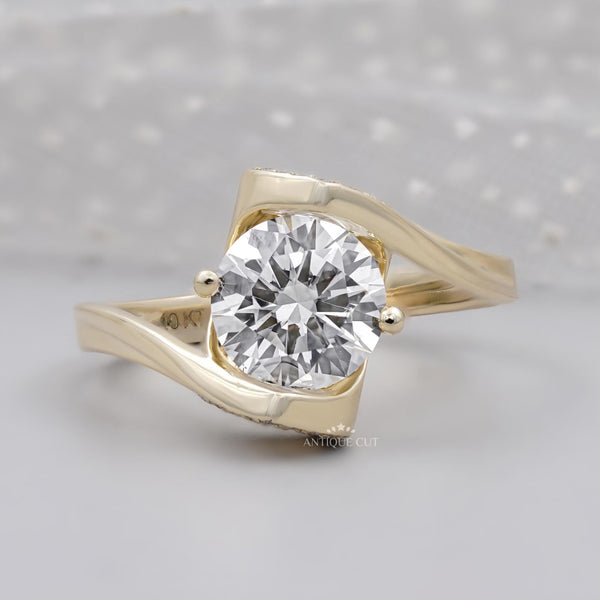
Lab grown diamond engagement rings can provide a combination of diamond quality and budget flexibility that appeals to people who want a particular size or design without spending as much as a comparable natural diamond. However, the decision should be based on your priorities. A lab grown engagement ring may make sense if you prioritize:
- Larger center-diamond size
- Budget flexibility
- A particular diamond shape
- Specific color or clarity characteristics
- A detailed setting
- Laboratory-grown origin
A natural diamond may be preferable if you specifically value natural geological origin or want a mined diamond. Neither choice is automatically the right one for every buyer.
Are Lab Grown Diamonds a Good Investment?
This is where expectations matter. If your primary goal is investment growth, a laboratory-grown diamond should not automatically be treated as an appreciating asset.
Diamonds in general are not equivalent to traditional financial investments such as stocks, bonds, or other assets designed specifically for investment returns. For laboratory-grown diamonds, declining wholesale and retail prices make the investment argument particularly difficult.
Better Reasons to Buy
A lab-grown diamond can make sense when you value:
- Size
- Appearance
- Diamond material
- Ring design
- Personal meaning
- Budget flexibility
- Everyday wear
If those are your priorities, the purchase can be worthwhile even if the resale value is low.
How to Determine Whether a Lab Grown Diamond Is Worth the Price
Rather than asking whether all lab-grown diamonds are worth it, evaluate each individual diamond. Use the following checklist.
Check the Cut: For brilliant shapes, examine cut grade and proportions. For fancy shapes, pay attention to symmetry, measurements and facet arrangement.
Check the Measurements: Carat weight only tells you how much the diamond weighs. Length and width show how much surface area you see from the top.
Review Color: Compare several stones when possible. You may find that a slightly lower color grade looks nearly identical to a higher grade in the chosen setting.
Evaluate Clarity: Do not pay for a high clarity grade if a lower grade diamond is already eye-clean and attractive.
Verify Certification: Make sure the grading report belongs to the diamond being sold.
Inspect the Setting: A quality diamond deserves a secure and properly constructed setting.
Compare the Total Price: Look at the complete ring price rather than evaluating only the advertised center-diamond price.
Are Lab Grown Diamonds Worth It for Engagement Rings?
Lab grown diamond engagement rings can be particularly attractive when the goal is to maximize the center stone while staying within a defined budget. A buyer who wants a 2-carat oval, cushion, radiant, or round diamond may find laboratory-grown options that fit a budget where comparable natural diamonds would require a substantially higher expenditure.
But there is no requirement to maximize carat weight. Some buyers prefer a smaller, exceptionally well-cut diamond in a carefully designed setting. Others prefer a larger stone with a simple solitaire setting. The right purchase depends on the balance between diamond quality, ring design and budget.
A Simple 2026 Value Checklist
| Factor | Why It Matters |
|---|---|
| Purchase Price | Determines your initial spending |
| Carat Weight | Indicates diamond weight |
| Measurements | Helps evaluate visible size |
| Shape | Determines the diamond's outline |
| Cut | Influences visual performance |
| Color | Affects appearance and pricing |
| Clarity | Indicates internal and external characteristics |
| Certification | Provides documented diamond information |
| Setting | Holds and frames the center stone |
| Metal | Influences appearance and cost |
| Resale | Helps set realistic expectations |
| Personal Preference | Determines whether the ring suits you |
This checklist can help separate actual buying priorities from assumptions about future value.
Conclusion
For many buyers, they can be. Their main advantage is the ability to purchase a real diamond at a generally lower price than a comparable natural diamond. This can provide greater flexibility when choosing carat weight, color, clarity, shape, and setting.
At the same time, buyers should have realistic expectations about lab grown diamond value and resale. A lower purchase price does not automatically mean stronger future financial value. Lab grown diamond prices can change as production, availability, technology, and consumer demand develop.
The strongest reason to choose a lab grown diamond is therefore not the expectation of making money later. It is the combination of diamond material, appearance, design options, and purchase price that suits your needs.
When comparing lab grown diamonds 2026 options, examine the individual stone rather than relying on general assumptions. Check its certification, measurements, proportions, color, clarity, cut characteristics, and actual appearance. If you are purchasing a ring, evaluate the setting, metal, craftsmanship, return policy, and warranty as well.
Design Your Own Jewelry with Antiquecut
Frequently Asked Questions
1. Are lab grown diamonds worth it in 2026?
They can be worthwhile for buyers who prioritize diamond quality, size, design, and budget flexibility. The answer depends on your intended use and personal priorities.
2. Are lab grown diamonds real diamonds?
Yes. Lab grown diamonds are diamonds produced in laboratory environments. They have the same fundamental crystal structure and chemical composition as natural diamonds.
3. Are lab grown diamonds cheaper than natural diamonds?
Lab grown diamonds are generally priced lower than comparable natural diamonds, although exact pricing varies according to carat, shape, color, clarity, cut, certification, and market conditions.
4. Do lab grown diamonds have resale value?
They can have resale value, but the amount varies and should not be assumed to equal the original purchase price. Market conditions can have a significant effect.
5. Are lab grown diamonds a good investment?
They should generally not be purchased with the expectation of guaranteed investment returns. Their value is better considered in terms of the quality and enjoyment they provide for the purchase price.
6. How much do lab grown diamonds cost in 2026?
There is no single price. Lab grown diamond prices depend on individual specifications, including carat weight, shape, color, clarity, cut, certification, and current market pricing.
7. Are lab grown diamonds vs real diamonds the same?
The terminology can be misleading because lab grown diamonds are real diamonds. The more accurate comparison is lab grown diamonds versus natural diamonds, with origin being the primary distinction.
8. Are lab grown diamonds good for engagement rings?
Yes. Lab grown diamonds can be used in engagement rings and are available in many shapes, sizes, and settings.
9. What affects lab grown diamond value?
Carat weight, shape, color, clarity, cut, measurements, certification, market conditions, and current retail pricing can all influence the value of an individual stone.
10. Should I buy a lab grown diamond in 2026?
If the diamond's appearance, specifications, design, and price fit your needs, it can be a suitable purchase. Consider resale expectations separately from the value you receive from owning and wearing the jewelry.


