

 Round
Round Diamond Buying Guide: The 4 Cs Explained for Buyers
Diamond Education
4 Cs of Diamonds Guide
Cut, color, clarity, and carat are the core characteristics used to describe diamond quality. Explore each factor and compare grades before choosing your diamond.
01 / Cut
Diamond Cut
Cut has the biggest impact on how a diamond actually sparkles. While carat, color, and clarity are set by nature, cut depends entirely on the skill of the person who shapes the stone. It controls how light enters, bounces around, and exits, creating brilliance, fire, and sparkle.
The GIA rates cut on a five-tier scale from Excellent to Poor. A well-proportioned diamond bounces light back through the top for maximum brightness. A poorly cut one lets light escape through the sides or bottom, leaving the stone looking dull or lifeless, no matter how good its color or clarity is.
Diamond Cut Guide
02 / Clarity
Diamond Clarity
Clarity refers to how free a diamond is from internal inclusions and external blemishes. Most of these marks are so tiny they're invisible to the naked eye and don't affect how the diamond looks.
What matters is the size, number, type, visibility, and location of these characteristics. An inclusion sitting right under the table is far more noticeable than one tucked near the girdle, which is why it's worth examining each diamond in person rather than judging by the grading report alone.
Diamond Clarity Guide
03 / Color
Diamond Color
Color grading actually measures the lack of color in a diamond. The less tint, the higher the grade. The GIA scale runs from D (completely colorless) to Z (where a yellowish or brownish tint becomes noticeable).
There's no single "best" grade. It depends on the diamond's size, shape, the metal it's set in, and personal taste. A yellow gold setting, for instance, can make near-colorless diamonds look whiter by contrast. Shape matters too: step cuts like emerald or asscher tend to show off any underlying color more than brilliant cuts, which hide it better with their light-scattering facets.
Diamond Color Guide
04 / Carat
Diamond Carat
Carat refers to a diamond's weight, not necessarily how big it looks from above. Two diamonds of identical carat weight can appear noticeably different in size depending on their shape, depth, and how they're proportioned — an antique cut , for instance, is often cut deeper and can face up smaller than a modern round brilliant of the same weight.
When choosing a carat weight, it helps to factor in finger size, the style of setting, day-to-day lifestyle, and budget, not just the number itself. In fact, a smaller diamond with excellent proportions can often look more visually pleasing than a larger one that's cut poorly.
Diamond Carat Guide
05 / Diamond Shape
Diamond Shape
Shape describes the outline of a diamond when you look at it from above: round, oval, pear, and so on. It's a different quality from cut, which is about how well the facets are proportioned and arranged, not the overall outline.
Round brilliant remains the most popular choice by far. Everything else, including emerald, marquise, oval, pear, cushion, radiant, princess, and heart, falls under the "fancy shape" category.
Shape isn't just about looks; it affects how big a diamond appears, how much of the finger it covers, how durable it is day-to-day, and what kind of setting works best. Elongated shapes like oval and marquise tend to look larger than their carat weight suggests, while shapes with pointed corners, like pear or marquise, usually need protective prongs to guard against chipping.
Diamond Shape Guide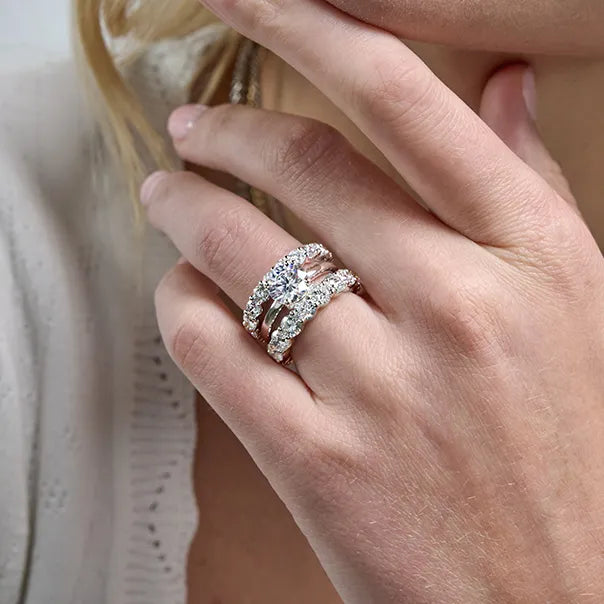


Discover Styles
Discover diverse engagement ring styles, each representing a distinct expression of love and devotion.


 0.50 ct
1.00 ct
2.00 ct
0.50 ct
1.00 ct
2.00 ct
08 / Diamond Size
Diamond Size
Size refers to a diamond's actual physical dimensions and how much presence it has when viewed face-up. It is related to carat weight, but not the same thing.
Millimeter measurements give a clearer picture of how large a diamond will actually look from above. Because factors like shape, cut proportions, depth, and table size vary, two diamonds with identical carat weight can have noticeably different visible spreads.
The setting plays a role too. A halo setting, for example, adds sparkle and width around the center stone, making it appear larger, while a raised setting can give the diamond more visual prominence on the hand.
MM to Carat Weight Conversion Guide
09 / Types of Diamonds
Types of Diamonds
Natural Diamonds
Natural Diamonds are formed miles below the Earth's surface, where extreme heat and pressure act on carbon over the course of millions of years. Their appeal lies largely in this natural origin story and the fact that supply is inherently limited because nature only makes so many.
Lab Diamonds
Lab-grown diamonds are chemically, physically, and optically identical to natural ones. The only real difference is where they come from. Instead of forming underground over eons, they're grown in a lab using advanced technology that replicates the same conditions in a much shorter timeframe.
Lab Grown vs. Natural Diamonds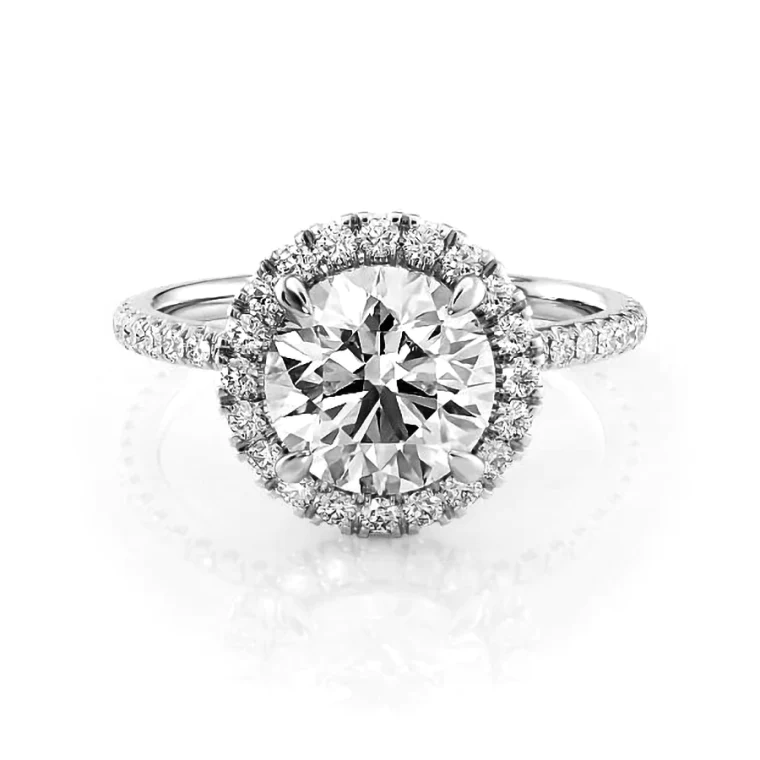
11 / Finding Your Combination
Balance the 4 Cs Around What You See
Grades matter, but the best combination depends on how the diamond looks, the setting you choose, and where you prefer to place your budget.
Prioritize Cut
Strong proportions and light return often have the greatest impact on a diamond's face-up appearance.
Choose Eye-Clean Clarity
Compare inclusions in the actual stone instead of paying only for a higher clarity label.
Match Color to Metal
Setting metal, diamond shape, and carat weight can change how much warmth is visible.
12 / 4 Cs FAQ
4 Cs of Diamonds FAQ
Cut usually has the strongest influence on light performance and face-up appearance. The other three factors should then be balanced around your preferences and budget.
Many VS and carefully selected SI diamonds can appear eye-clean, but visibility depends on inclusion type, position, diamond size, and shape.
No. Carat measures weight. Face-up size also depends on shape, depth, table percentage, and how the diamond is set.
Yes. Yellow or rose gold can complement near-colorless diamonds, while white prongs may help keep the area around the center stone visually neutral.


