


Choosing an engagement ring becomes much easier when you understand the main types of engagement rings available. A ring may look simple at first, but its setting, diamond cut, band width, stone arrangement, and metal can completely change how it appears and feels on the hand.
Some people prefer a single diamond placed at the center of a plain band. Others want a halo, side stones, a detailed basket, or two center diamonds. The best choice depends on personal taste, daily routine, budget, finger shape, and how much maintenance the wearer is comfortable with.
This article explains ten popular ring designs, the differences between engagement ring settings, and the diamond cuts that work well with each one. It also includes practical buying advice for couples shopping in the USA.
Understanding the Main Types of Engagement Rings
The phrase “engagement ring type” can describe several different parts of a ring. In most cases, it refers to the way the center diamond and any additional stones are placed on the band. For example, a solitaire ring has one main stone, while a three-stone ring has a center diamond with one stone on each side. A halo ring surrounds the center with smaller diamonds, while a bezel ring uses a metal rim to hold the diamond.
It is useful to separate three terms before comparing designs:
- Ring setting: The structure that holds and supports the diamond.
- Diamond cut or shape: The visible outline of the diamond, such as round, oval, pear, cushion, radiant, or emerald.
- Band design: The part that wraps around the finger. It may be plain, pavé-set, split, wide, narrow, straight, or curved.
These elements can be combined in many ways. An oval diamond can be placed in a solitaire, halo, bezel, cathedral, or three-stone setting. This is why two rings with the same diamond shape may look very different.
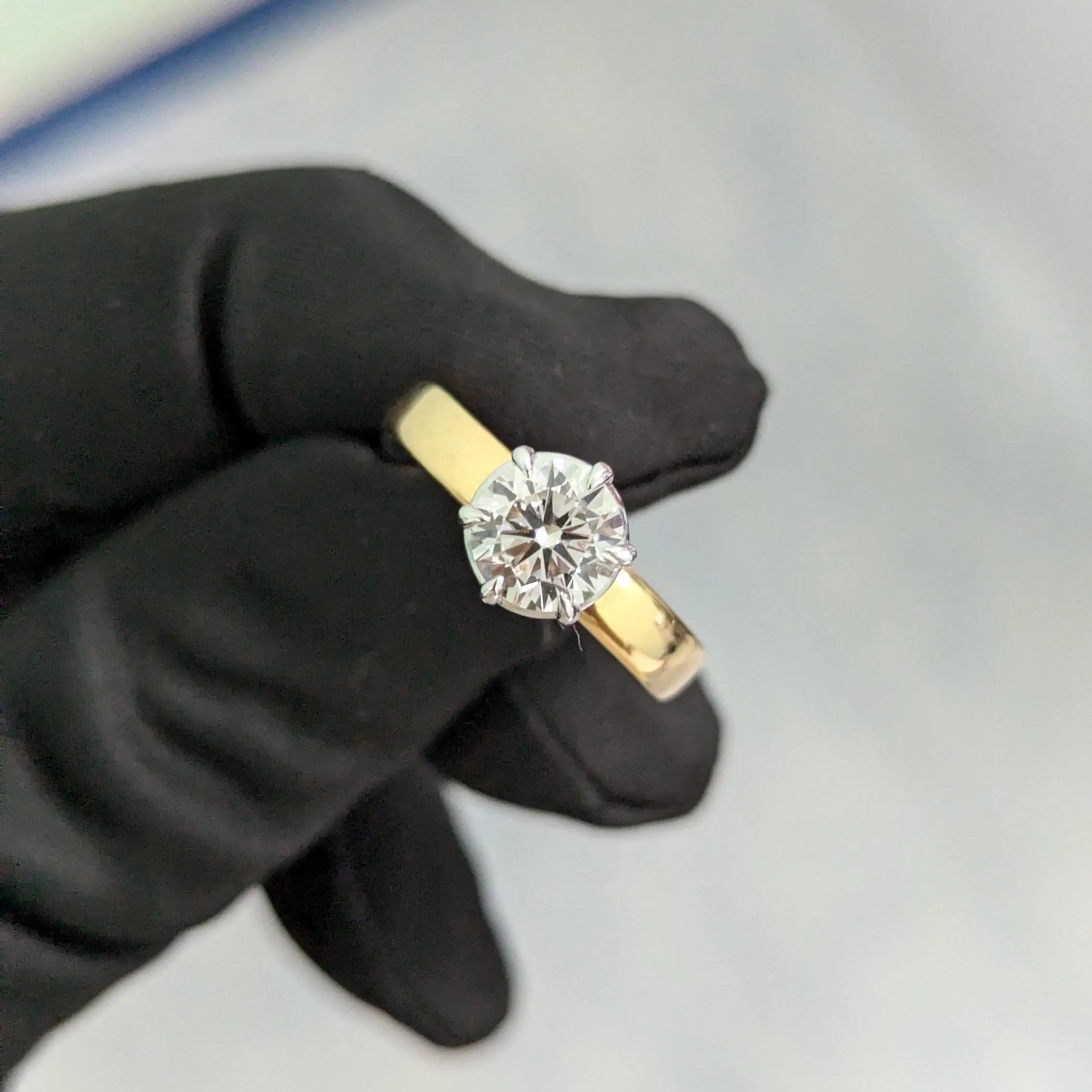
Solitaire Ring
Exceptional craftsmanship with refined details and premium finishing for unforgettable moments.
Explore →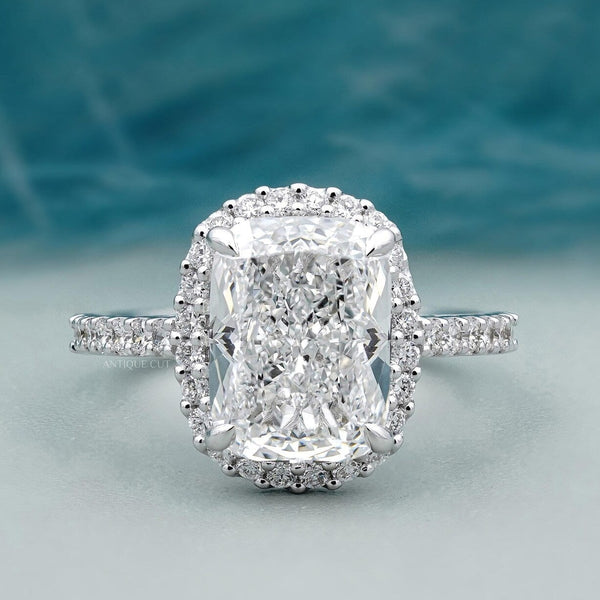
Halo Ring
Designed with luxurious brilliance and handcrafted precision for lasting beauty.
Explore →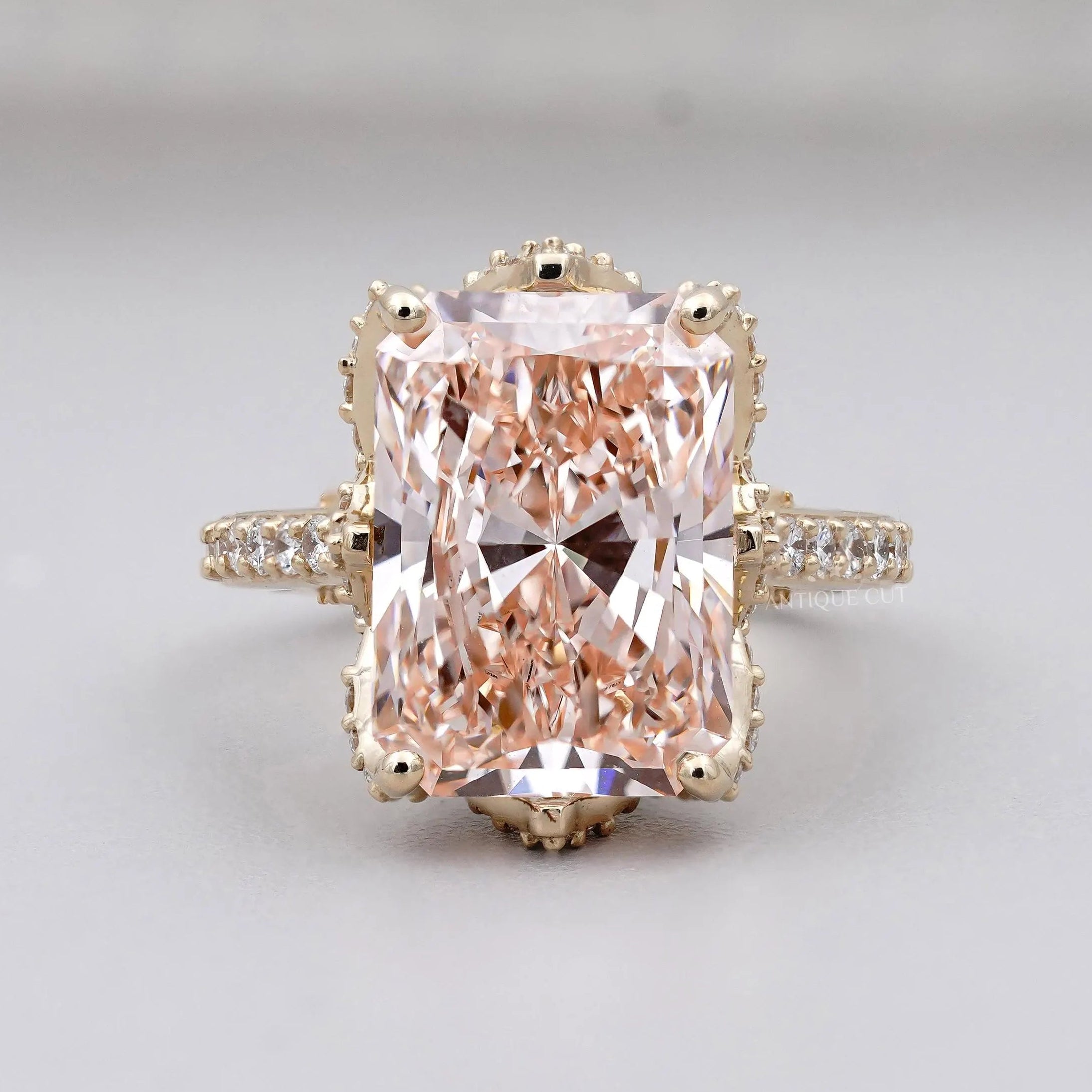
Fancy Ring
Beautiful detailing inspired by heritage craftsmanship with premium gold finishes.
Explore →Solitaire Ring
Exceptional craftsmanship with refined details and premium finishing for unforgettable moments.
Explore →Halo Ring
Designed with luxurious brilliance and handcrafted precision for lasting beauty.
Explore →Fancy Ring
Beautiful detailing inspired by heritage craftsmanship with premium gold finishes.
Explore →Popular Engagement Ring Settings to Consider
These are the mountings that determine how secure, how visible, and how the center stone looks day to day. If you're comparing different types of engagement rings for everyday wear, start here.
1. Solitaire Setting
The solitaire is the most requested setting in the United States, and for good reason. A single stone is held by four or six prongs above a plain band, putting all the attention on the center diamond without any distraction from side stones. Because there's less metal and fewer stones involved, a solitaire is usually more budget-friendly than other settings at the same carat weight. It's also easier to clean and maintain, since there are no small accent stones to trap lotion or soap residue.
2. Halo Engagement Rings
A halo engagement ring places a circle or shaped border of smaller diamonds around the center stone. The surrounding diamonds can follow the exact outline of the center or create a contrasting shape. A good example of this design is a cushion halo engagement ring, where the smaller surrounding stones create a defined frame around the center.
3. Three-Stone Engagement Rings
A three-stone engagement ring has one center diamond and two side stones. The center is generally the largest, but some rings use three diamonds of similar size for a broader layout. The design is often associated with the past, present, and future of a relationship. Buyers may also choose it simply because the side stones provide coverage across the finger.
4. Pavé Engagement Rings
A pavé engagement ring has small diamonds placed closely along the band. The term comes from a setting method that creates a continuous surface of stones with very little metal visible between them. Pavé can be used with almost any center setting. A ring may have a solitaire center with pavé shoulders, a halo with a pavé band, or a three-stone arrangement with pavé diamonds extending down both sides.
5. Bezel-Set Engagement Rings
A bezel setting holds the diamond with a rim of metal around all or part of its edge. A full bezel surrounds the entire stone, while a half bezel leaves sections of the diamond open. This is one of the most practical types of engagement ring settings for people with active routines. The metal border protects the diamond’s outer edge and reduces the chance of prongs catching on fabric.
6. Hidden Halo Engagement Rings
A hidden halo places a row of small diamonds underneath the center stone rather than around its top edge. From directly above, the ring may resemble a solitaire. From the side, the hidden diamonds become visible beneath the center. This design is popular with buyers who want extra detail without changing the center diamond’s face-up outline. It works with round, oval, cushion, radiant, pear, and emerald-cut centers.
7. Cathedral Engagement Rings
A cathedral setting uses raised metal arches that rise from the band to support the center stone. The shape resembles the arches found in cathedral architecture, which is where the setting gets its name. These arches create height and give the center setting a strong structural appearance. The shoulders may be plain, pavé-set, engraved, or combined with side stones.
8. Cluster Engagement Rings
A cluster engagement ring groups several smaller diamonds to create a larger overall shape. The diamonds may form a round, oval, floral, geometric, or free-form arrangement. Unlike a halo, which usually has one clearly defined center stone, a cluster may use several diamonds of similar size. Some designs still include a larger middle diamond, but the surrounding stones remain an important part of the overall pattern.
9. Toi et Moi Engagement Rings
“Toi et Moi” means “you and me” in French. This type of ring places two main stones together, representing two people in a relationship. The diamonds may have the same shape, but mixed-shape combinations are especially common. Popular pairings include pear and emerald, oval and pear, marquise and round, or radiant and pear.
10. Split-Shank Engagement Rings
A split-shank ring has a band that divides into two or more sections as it approaches the center setting. The split can be narrow and close to the diamond or wide enough to create noticeable open space. This design adds width near the top of the finger without requiring a very thick band around the entire ring. It can support larger center diamonds and provide extra structure for halo or three-stone settings.
Types of Engagement Ring Cuts That Change the Overall Look

How Types of Engagement Ring Settings Affect Daily Wear
The appearance of a ring matters, but daily comfort should carry equal weight. A ring that suits the wearer’s routine is more likely to remain comfortable and secure over many years.
A person who wears gloves at work may prefer a low-profile bezel or compact solitaire. Someone who removes the ring during exercise and household work may be comfortable with a higher cathedral or halo setting.
White gold generally requires periodic rhodium plating to maintain its bright white surface. Yellow and rose gold do not require rhodium, though all gold rings can collect scratches through regular use. Platinum is dense and durable, but it develops a natural surface patina and may cost more.
Choosing Between Different Types of Engagement Rings
When comparing different types of engagement rings, begin with the wearer rather than the current trend. Look at the jewelry they already use. Do they choose plain metal, small diamonds, wide bands, geometric shapes, or detailed designs?
Next, consider lifestyle. A person who works with tools, handles equipment, works in healthcare, or frequently uses gloves may prefer a lower setting. Someone who enjoys detailed jewelry and is comfortable with regular cleaning may appreciate a halo, cluster, or pavé ring.
The wedding band should be part of the decision from the beginning. Some settings allow a straight band to sit flush, while others require a curved, open, or fitted band. Trying both rings together helps prevent spacing surprises later. At Antiquecut, exploring different types of engagement rings alongside matching wedding bands makes it easier to create a coordinated bridal set that fits comfortably and complements your chosen design.
Mistakes to Avoid When Choosing an Engagement Ring
One common mistake is choosing a setting based only on a close-up photograph. Product photos often make the ring appear larger than it will look on the hand. Ask for millimeter dimensions and hand-worn images whenever possible.
Another mistake is selecting carat weight without reviewing face-up measurements. Two diamonds with the same weight can appear different in size depending on their shape, depth, and proportions.
Finally, do not assume every ring can be resized easily. Full pavé bands, eternity bands, detailed engraving, tension settings, and unusual metalwork can limit resizing options.
Final Thoughts
Choosing among the many types of engagement rings becomes much easier once you understand how styles, settings, and diamond cuts work together. Every design offers something different, whether you prefer the clean look of a solitaire, the added detail of a halo, or the wider appearance of a three-stone ring.
Taking time to compare the different types of engagement rings, explore the types of engagement ring settings, and understand the types of engagement ring cuts will help you make a confident decision before purchasing.
The ideal engagement ring is one that reflects your personal preference, fits comfortably into everyday life, and remains meaningful for years to come. Before making your final choice, compare several designs, review diamond quality, and select a ring that aligns with your budget and style.
FAQs
Q. Which engagement ring setting is the most durable for daily wear?
Bezel settings are generally considered the most durable and low-maintenance option, since the metal rim protects the stone's edges from chips and daily impact.
Q. Is a halo setting a good option on a tight budget?
Yes. A halo setting is one of the most effective ways to make a smaller center stone appear larger, which is why it's often recommended for buyers working with a limited budget.
Q. What's the difference between a diamond's setting and its cut?
The cut refers to the shape and faceting of the stone itself, such as round or oval, while the setting refers to the metal structure that holds the stone in place, such as prong, bezel, or pavé.
Q. How long does it take to have an engagement ring custom made?
Most US jewelers quote 3 to 6 weeks for a custom build, though this can extend during peak proposal seasons around the winter holidays and Valentine's Day.
Q. Do certain cuts hide flaws better than others?
Yes. Round and cushion cuts tend to hide small inclusions more effectively than step cuts like emerald or asher, which show internal flaws more clearly due to their broad, open facets.
Q. Can I combine a vintage-style setting with a newer cut shape?
Yes. It's common for buyers to pair an older-style setting, such as pavé or a three-stone design, with a newer cut shape like oval or cushion. Mixing eras this way is one of the most requested custom combinations at jewelers today.
Q. What's the average cost difference between a solitaire and a halo setting?
For a comparable center stone size, a halo setting typically adds several hundred to a few thousand dollars to the total cost, depending on the size and quality of the accent stones used around the center diamond.


