


Finding a beautiful engagement ring does not always require spending a very large amount of money. With a budget of $4,000, buyers can explore a wide selection of lab grown diamond engagement rings under $4000, including different diamond shapes, settings, metals, and design styles. Lab grown diamonds are diamonds produced using advanced technological processes that recreate the conditions under which diamonds develop naturally.
They have essentially the same chemical composition and crystal structure as natural diamonds, while their pricing can be significantly different. Instead of concentrating only on carat weight, it is useful to consider the complete ring: diamond quality, proportions, shape, setting, metal, craftsmanship, certification, and long-term wearability.
At Antiquecut, buyers can explore diamond jewelry options while comparing characteristics that influence the appearance and price of a finished engagement ring. The same principles can help when evaluating any ring within this price range. This article explains how to select the best lab grown diamond rings under $4000, which diamond shapes can work well, how to allocate the budget, and what details deserve attention before making a purchase.
What Can You Expect From Lab Grown Diamond Rings Under $4000?
A $4,000 budget gives buyers several possibilities. The exact specifications available will vary depending on the diamond's shape, quality, setting, and retailer. However, lab grown diamonds generally allow a buyer to consider larger stones at a particular budget than they might when comparing equivalent natural diamonds. Rather than setting a fixed carat expectation, buyers should compare the entire diamond specification.
Key Factors to Compare
| Factor | Why It Matters |
|---|---|
| Carat Weight | Indicates diamond weight, but not its complete visual size |
| Shape | Influences appearance and pricing |
| Cut | Affects proportions and light performance |
| Color | Determines how much body color is visible |
| Clarity | Describes inclusions and blemishes |
| Measurements | Shows the diamond's actual dimensions |
| Certification | Documents important diamond characteristics |
| Setting | Influences appearance, security, and craftsmanship |
| Metal | Affects appearance, durability, and cost |
| Band Design | Contributes to the overall look and price |
| Budget | Determines how these characteristics can be balanced |
One of the biggest advantages of having a $4,000 budget for a lab grown ring is flexibility. A buyer may choose to prioritize a larger center diamond, a higher color grade, a particular shape, or a more detailed setting. The best choice depends on which characteristics matter most to the wearer.
Don't Judge a Diamond by Carat Alone
Carat is often the first specification shoppers notice, but it should not be the only one. Two diamonds with the same carat weight can have different measurements. This is why reviewing length, width, depth, and overall proportions can be valuable when comparing lab grown diamond rings under $4000.
Best Lab Grown Diamond Rings Under $4000 by Style

The term best lab grown diamond rings under $4000 does not describe one specific ring. It depends on the buyer's preferred shape, setting, finger coverage, and overall design. Here are several styles worth considering.
1. Oval Lab Grown Diamond Engagement Ring: Oval diamonds are particularly useful when the goal is strong finger coverage. Their elongated outline can make the center stone appear larger across the finger than a round diamond of comparable weight. The shape also works well in solitaire, halo, pavé, and three-stone settings. For a $4,000 budget, an oval center can be an effective choice when visible size is a priority.
2. Cushion Cut Lab Grown Diamond Ring: Cushion diamonds combine a square or rectangular outline with rounded corners. They can produce a fuller, softer silhouette than sharp-cornered square shapes. Cushion cuts are available in different facet arrangements, including styles that emphasize larger flashes of light or more intricate faceting. A cushion center works especially well with:
- Solitaire setting
- Hidden halo
- Pavé band
- Cathedral settings
- Three-stone arrangements
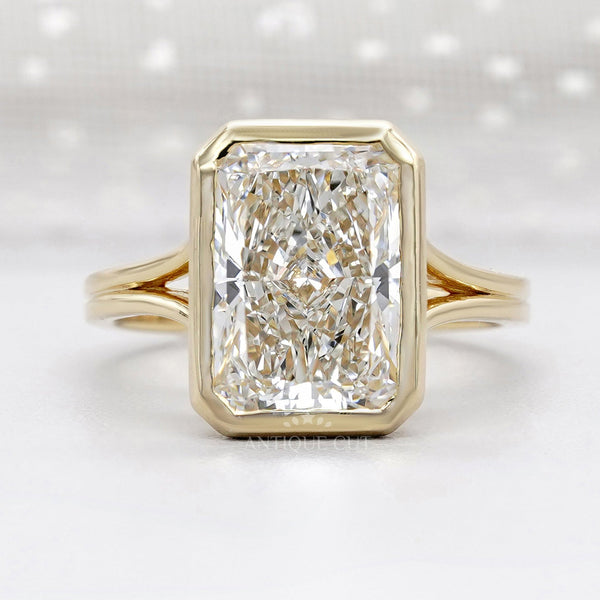
3. Radiant Cut Lab Grown Diamond Ring: Radiant diamonds feature clipped corners and a faceted interior. Their rectangular outline can provide strong finger coverage while retaining considerable visual activity within the stone. For buyers who want a rectangular center but prefer more internal faceting than an emerald-cut diamond typically provides, a radiant cut is worth considering.
4. Emerald Cut Lab Grown Diamond Ring: Emerald-cut diamonds are defined by step-cut facets and a broad, open appearance. Because their large facets can make inclusions and color easier to see, clarity and color deserve particular attention. An emerald-cut solitaire can be a strong choice for buyers who prefer clean geometric lines rather than a heavily decorated setting.
5. Round Lab Grown Diamond Engagement Ring: Round diamonds remain one of the most recognized diamond shapes. A round solitaire places almost all visual attention on the center stone, while a pavé or halo setting adds additional detail around it. With a $4,000 budget, buyers can compare center-stone size against cut quality rather than automatically choosing the largest available diamond.
How to Choose the Best Lab Grown Diamond Engagement Ring Under $4000
Choosing among lab grown diamond engagement rings under $4000 becomes easier when the budget is divided according to priorities. Rather than spending most of the budget on the center diamond automatically, consider the entire ring.



1. Decide on the Diamond Shape First
Start by determining which shape best suits the wearer's preferences. Round, oval, cushion, emerald, radiant, pear, and marquise diamonds each create different visual results. Choosing the shape first can make the remaining decisions easier.
2. Compare Diamond Measurements
Measurements provide valuable information about actual size. For example, a diamond's length and width can help determine how much finger coverage it provides. This can be especially useful when comparing different shapes.
3. Examine Color
Color preference depends partly on the diamond shape and metal. A white-gold or platinum setting can make body color more noticeable, while yellow gold can create a different visual relationship between the diamond and the setting.
Buyers do not necessarily need the highest available color grade. The better approach is to compare stones visually and evaluate how color affects the overall appearance.
4. Evaluate Clarity Carefully
Clarity describes internal inclusions and external blemishes. A diamond does not necessarily need the highest clarity grade to appear clean to the unaided eye.
For many buyers, an eye-clean diamond can provide a practical balance between appearance and budget. However, step-cut shapes such as emerald and Asscher diamonds can make inclusions easier to see, so clarity deserves additional attention with these cuts.
5. Prioritize Cut Quality
Cut should receive significant attention, especially for brilliant-style diamonds. A diamond with attractive proportions can look more visually impressive than a heavier stone with weaker proportions.
For round diamonds, laboratory grading reports can provide detailed cut information. Fancy shapes require additional visual evaluation because grading standards and proportions differ by shape.
6. Check the Certification
A grading report provides documented information about the diamond. Before buying, verify:
- Laboratory name
- Report number
- Carat weight
- Measurements
- Color
- Clarity
- Cut information where applicable
A certificate should correspond to the specific diamond being purchased.
7. Select the Setting
The setting changes both appearance and practicality. Popular options include:
| Setting | Main Characteristic |
|---|---|
| Solitaire | Places focus on the center diamond |
| Pavé | Adds smaller diamonds along the band |
| Halo | Surrounds the center with accent stones |
| Cathedral | Raises the center stone with supporting arches |
| Three-Stone | Uses two side stones beside the center |
| Bezel | Surrounds the diamond with metal |
| Hidden Halo | Adds diamonds beneath the center stone |
For a $4,000 budget, the setting can be adjusted according to how much of the budget you want to allocate to the center diamond.
Budget Planning for Lab Grown Diamond Rings Under $4000
One practical way to approach lab grown diamond rings for under $4000 is to divide the budget into three broad areas:
- Center diamond
- Ring setting and metal
- Additional design features
The center stone will usually account for a significant portion of the cost, but the final price can change substantially depending on the setting. A simple solitaire may leave more of the budget available for the center diamond.
A detailed pavé setting, halo, or three-stone arrangement may allocate more money toward additional diamonds and craftsmanship. These are budgeting concepts rather than fixed price ranges. Actual prices vary by diamond specifications, metal, craftsmanship, and retailer.
Should You Spend More on the Diamond or Setting?
There is no universal answer. Someone who wants the center stone to dominate may prefer a solitaire setting. Someone who likes additional diamond detail may prefer pavé or halo designs.
A buyer who wants a symbolic three-stone arrangement may allocate part of the budget to two side diamonds. The strongest choice is the one that creates the desired balance within the $4,000 limit.
What to Look for Before Buying

Before purchasing one of the best lab grown diamonds for engagement rings, create a checklist.
Diamond Checklist
- Confirm the diamond shape.
- Review carat weight.
- Check measurements.
- Compare color.
- Examine clarity.
- Review cut information.
- Check the grading report.
- Verify the report number.
- Compare multiple diamonds.
- Review photographs and videos where available.
Ring Checklist
- Confirm the metal type.
- Check band width.
- Examine prong construction.
- Consider setting height.
- Review accent diamonds.
- Confirm ring size availability.
- Understand resizing options.
- Check warranty terms.
- Review return conditions.
- Confirm shipping and insurance arrangements.
This process can prevent buyers from focusing on one specification while overlooking the finished ring.
Lab Grown Diamond Rings for Under $4000: How to Maximize the Budget
There are several practical ways to make a $4,000 budget work harder.
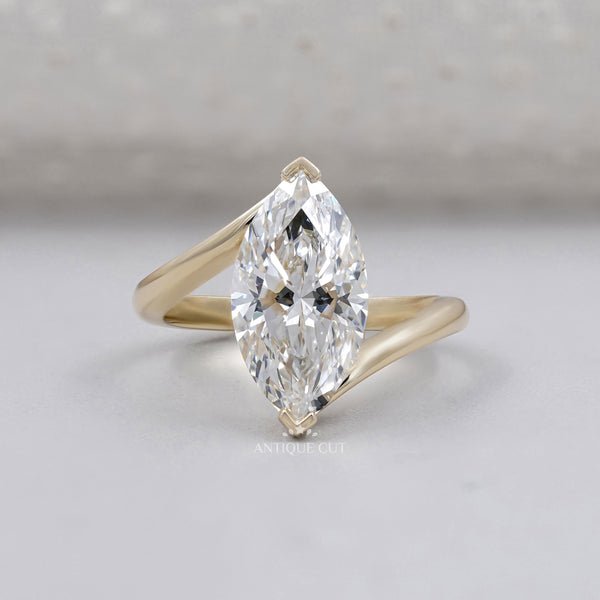
Choose a Shape With Strong Face-Up Size: Oval, radiant, cushion, pear, and marquise diamonds can provide substantial visible coverage.
Consider a Solitaire: If center-diamond size is the priority, a solitaire can direct more of the budget toward the main stone.
Avoid Paying Only for Higher Grades: A higher color or clarity grade may not create a proportionate visual improvement. Instead, compare diamonds side by side.
Consider Alternative Metal Options: White gold, yellow gold, rose gold, and platinum have different material and pricing characteristics. The metal should complement the diamond and fit the intended wear pattern.
Look Beyond Carat Weight: A diamond with excellent proportions can look more attractive than a heavier stone with weaker proportions. That distinction is particularly important when comparing fancy-shaped diamonds.
Conclusion
A $4,000 budget can provide considerable flexibility across diamond shapes, settings, metals, and center-stone sizes. Round, oval, cushion, emerald, radiant, and pear diamonds can all create distinctive engagement rings, while solitaire, pavé, halo, cathedral, bezel, and three-stone settings offer different ways to complete the design.
When comparing lab grown diamond engagement rings, look beyond carat weight. Measurements, cut quality, color, clarity, certification, setting construction, and overall craftsmanship all contribute to the finished ring.
Most importantly, compare complete rings rather than judging individual diamond in isolation. A slightly smaller center stone with attractive proportions and a well-made setting can be a stronger choice than a larger stone paired with a less suitable design.
With careful comparison, a $4,000 budget can provide a substantial range of lab grown diamond rings under $4000, allowing buyers to select a ring that combines the desired diamond shape, visual presence, setting, and quality without exceeding their planned spending limit.
Frequently Asked Questions
1. Can I buy a good lab grown diamond engagement ring for under $4000?
Yes. A $4,000 budget can provide access to many lab grown diamond engagement ring designs, although exact diamond specifications and prices vary.
2. What size lab grown diamond can I get for $4000?
There is no single guaranteed carat size. Diamond shape, color, clarity, cut, certification, setting, and retailer pricing all affect what is available.
3. Are lab grown diamond rings under $4000 good quality?
They can be. Quality depends on the individual diamond's cut, color, clarity, proportions, grading, and the craftsmanship of the ring setting.
4. What is the best diamond shape for a $4000 engagement ring?
There is no universal best shape. Round, oval, cushion, emerald, radiant, and pear shapes can all work well depending on the wearer's preferences.
5. Should I choose a larger lab grown diamond or a higher-quality diamond?
The answer depends on your priorities. If visual size is most important, you may prefer a larger stone. If cut, color, or clarity matters more, you may choose a smaller stone with stronger specifications.
6. Are lab grown diamonds real diamonds?
Yes. Lab grown diamonds have essentially the same chemical composition and crystal structure as natural diamonds. Their primary distinction is their origin.
7. Do lab grown diamonds come with certificates?
Many lab grown diamonds are accompanied by grading reports from recognized gemological laboratories. Always check the report for the specific diamond being purchased.
8. Does diamond shape affect the price?
Yes. Diamond shape can affect pricing because different shapes have different cutting requirements, demand levels, rough-diamond utilization, and market pricing.
9. Is a solitaire a good choice under $4000?
A solitaire can be an effective way to allocate more of the budget toward the center diamond because it uses fewer additional gemstones.
10. What should I prioritize when buying a lab grown engagement ring?
Prioritize the diamond's shape, proportions, cut, color, clarity, measurements, certification, and the quality and security of the setting. Also make sure the finished ring fits comfortably within your budget.


