


Choosing an engagement ring involves several decisions, from diamond shape and size to metal and setting. One of the most important choices is whether to select a mined diamond or a laboratory-grown diamond. For many buyers, lab grown diamond engagement rings have become an option worth considering because they offer the same fundamental diamond structure as natural diamonds while having a different origin. But are lab grown diamonds actually good for an engagement ring?
The short answer is yes, a lab grown diamond can be a very good choice for an engagement ring. Lab grown diamonds are real diamonds, not diamond imitations such as cubic zirconia or glass. They can have the same crystal structure and chemical composition as natural diamonds, and they can be evaluated according to characteristics such as color, clarity, cut, and carat weight.
Antiquecut is one example of a jewelry brand offering lab grown diamond jewelry for buyers interested in comparing different engagement-ring designs. However, deciding between a lab grown and natural diamond should involve more than simply comparing prices. Diamond quality, certification, setting, durability, personal preferences, and budget all deserve consideration.
Lab Grown vs Natural Diamond Engagement Ring
The lab grown vs natural diamond engagement ring comparison is primarily a question of origin, pricing, availability, and personal priorities. Both types are diamonds, but they form in different environments.
Natural diamonds develop through geological processes beneath the Earth's surface over extremely long periods. Lab grown diamonds are produced using technological processes that recreate conditions under which diamond can form.
Main Differences
| Factor | Lab Grown Diamond | Natural Diamond |
|---|---|---|
| Origin | Produced in a laboratory | Formed naturally underground |
| Material | Diamond | Diamond |
| Crystal Structure | Diamond crystal structure | Diamond crystal structure |
| Chemical Composition | Essentially the same basic composition | Essentially the same basic composition |
| Shapes | Many shapes available | Many shapes available |
| Grading | Can receive laboratory grading reports | Can receive laboratory grading reports |
| Price | Generally lower than comparable natural diamonds | Generally higher for comparable specifications |
| Availability | Broad range of sizes and qualities | Broad range of sizes and qualities |
| Mining | Does not require traditional diamond mining | Obtained through mining |
| Identification | Specialized testing can distinguish origin | Specialized testing can distinguish origin |
The difference in origin is important, but it does not mean that one is automatically better for every buyer. Someone who places importance on geological origin may prefer a natural diamond. Another buyer may prioritize a larger center stone or a particular design within a fixed budget and choose a lab grown diamond.
Why Lab Grown Diamonds Work Well for Engagement Rings
An engagement ring is normally worn frequently, so the diamond needs to combine attractive appearance with suitable durability. Diamond ranks at 10 on the Mohs scale of mineral hardness, making it highly resistant to scratching. Both lab-grown and natural diamonds possess the diamond structure responsible for this hardness.
1. They Offer Diamond-Level Durability:
A lab-grown diamond is not a softer substitute for a diamond. Because it has the same fundamental crystal structure, it offers the hardness expected from diamond jewelry. However, hardness does not mean indestructibility.
A diamond can still chip if struck in a vulnerable area. Pointed shapes such as pear and marquise diamonds require appropriate protection around their tips, while settings with exposed corners should be checked carefully. The setting is therefore just as important as the center stone.
2. They Provide More Budget Flexibility:
One of the strongest reasons buyers consider lab grown diamond engagement rings is price. Lab-grown diamonds are generally less expensive than comparable natural diamonds. This can allow buyers to consider:
- A larger center diamond
- A higher color grade
- Higher clarity
- More detailed settings
- A different diamond shape
- A larger overall ring
However, pricing varies significantly from one diamond to another. Carat weight alone does not determine price. Cut, proportions, color, clarity, shape, certification, and the ring setting all contribute to the final cost.
3. They Offer a Wide Range of Shapes:
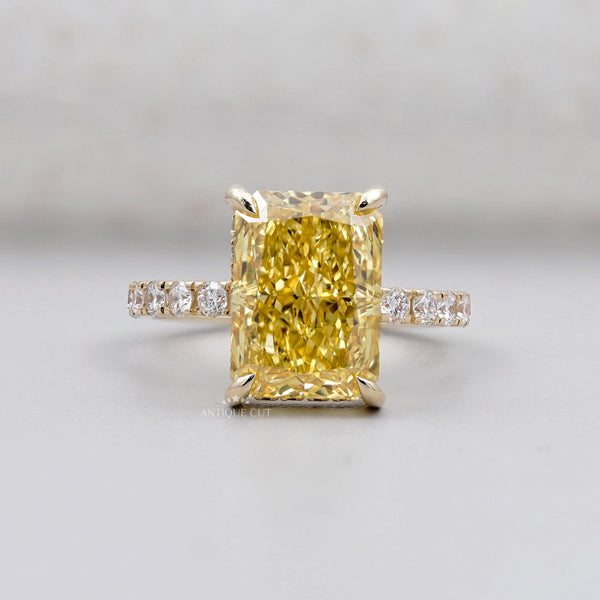
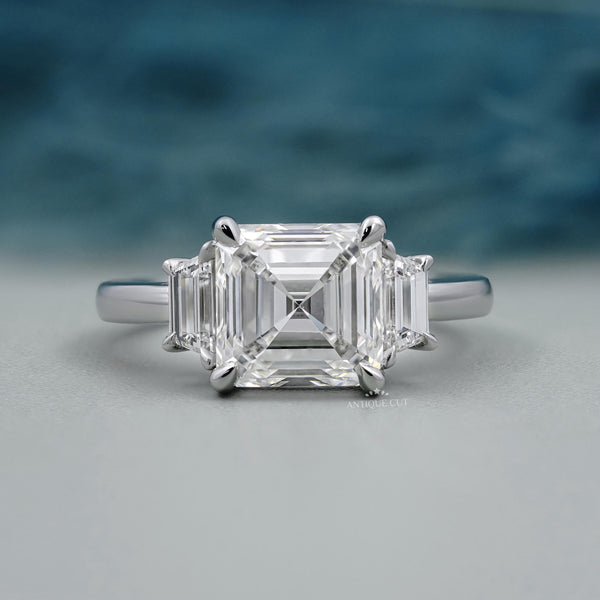
Lab-grown diamonds are available in many of the same shapes used for natural diamond engagement rings. Popular choices include:
This gives buyers plenty of flexibility when selecting the design. An oval diamond can provide an elongated appearance, while a cushion cut offers rounded corners and a fuller outline. An emerald cut emphasizes broad step facets, making proportions and clarity especially important.

How Much Does a Lab Grown Diamond Engagement Ring Cost?
One of the biggest reasons buyers investigate how much does a lab grown diamond engagement ring cost is the potential difference in pricing compared with a natural diamond with similar specifications. There is no single fixed price. The total cost can depend on:
- Diamond carat weight
- Shape
- Color
- Clarity
- Cut quality
- Certification
- Ring setting
- Metal
- Accent diamond
- Brand
- Customization
- Current market pricing
For example, a simple solitaire ring with a larger lab grown center diamond may have a different price from a smaller diamond surrounded by a halo and pavé band. The setting itself can represent a significant part of the final price.
Why Prices Can Differ So Much:
Two rings can both contain a 2-carat lab grown diamond but have substantially different prices. Possible reasons include:
- Different diamond shapes
- Different proportions
- Different color grades
- Different clarity grades
- Different laboratory reports
- Different metals
- Different setting complexity
- Different accent-stone weights
- Different craftsmanship
How to Choose Quality Lab Grown Diamond Engagement Rings
Price is important, but the diamond should be evaluated using its complete specifications.
Start With Cut:
Cut is one of the most important characteristics for the visual performance of a diamond. For round brilliant diamonds, examine the cut grade, symmetry, polish and proportions. For fancy shapes, look beyond a single grade. Examine measurements, length-to-width ratio, symmetry and photographs or videos. A larger diamond is not automatically better if its proportions reduce its visual appeal.
Consider Color:
Diamond color ranges from colorless to increasingly noticeable body color. For white diamond engagement rings, buyers often compare color grades within their budget. The metal can influence how the diamond's color appears. White metals may make warmer tones more noticeable, while yellow gold can create a different visual contrast. There is no need to automatically choose the highest color grade if a slightly lower grade provides the appearance you prefer.
Evaluate Clarity:
Clarity refers to internal and external characteristics. The goal is not necessarily to purchase the highest clarity grade available. Instead, examine whether inclusions are visible and whether they affect the diamond's appearance. Clarity becomes particularly important with emerald-cut diamonds because their broad step facets can make inclusions easier to see.
Check Measurements:
Carat measures weight, but measurements reveal the diamond's actual dimensions. This is especially useful when comparing elongated shapes. Two diamonds with the same carat weight may have different length, width and depth measurements. As a result, one may appear larger or more elongated when viewed from above.
What Makes Lab Grown Diamond Engagement Rings a Good Choice?
There are several reasons buyers consider lab grown diamond engagement rings.
More Budget Flexibility:
The lower price of many lab grown diamonds can allow buyers to allocate their budget differently. For example, someone with a fixed budget may compare:
- A larger center diamond
- A more elaborate setting
- Higher color or clarity
- A premium metal
- Additional accent diamonds
The right allocation depends on personal priorities.
Broad Design Selection:
Lab grown diamonds are available in many familiar shapes and sizes. You can find:
- Round lab grown diamonds
- Oval lab grown diamonds
- Cushion lab grown diamonds
- Emerald lab grown diamonds
- Radiant lab grown diamonds
- Pear lab grown diamonds
- Princess-cut lab grown diamonds
- Marquise lab grown diamonds
This makes them suitable for a wide range of engagement-ring designs.
Certification Options:
Lab grown diamonds can be accompanied by grading documentation from recognized gemological laboratories. A report can provide information about the diamond's characteristics and help buyers compare different stones. Before purchasing, verify that the report corresponds to the specific diamond.
Lab Grown Diamond Engagement Rings: Advantages and Considerations
| Advantage | What It Means for Buyers |
|---|---|
| Lower typical pricing | More flexibility within a fixed budget |
| Real diamond material | Suitable for diamond jewelry |
| Wide selection | Many shapes and sizes available |
| Multiple setting options | Easy to personalize the design |
| Independent grading available | Easier to compare specifications |
| Larger stones may fit some budgets | More flexibility with carat weight |
There are also considerations. lab grown diamond prices have experienced substantial declines in recent years, so buyers should not assume that today's purchase will retain the same resale value as a natural diamond. The market for lab-grown diamonds and their long-term pricing continues to differ from that of natural diamonds.
How to Choose a Good Lab Grown Diamond
When selecting a lab grown diamond, use a structured comparison.
Step 1 Choose the Shape: Start with the shape you prefer.
Step 2 Set Your Budget: Determine the maximum amount you want to spend on the complete ring.
Step 3 Compare Carat and Measurements: Look at both carat weight and face-up dimensions.
Step 4 Evaluate Cut: For round diamonds, check the cut grade and proportions. For fancy shapes, examine the actual stone carefully.
Step 5 Compare Color: Consider the color grade alongside your chosen metal.
Step 6 Review Clarity: Check whether inclusions are visible without magnification.
Step 7 Verify Certification: Make sure the report belongs to the specific diamond.
Step 8 Select the Setting: Choose a setting that provides both the appearance and level of protection you want.
Step 9 Check Ring Construction: Review prongs, band thickness, accent stones, and overall craftsmanship.
Step 10 Review Purchase Terms: Before buying, check return, resizing, warranty, shipping, and repair policies.
Conclusion
So, are lab grown diamonds good for an engagement ring? For many buyers, the answer is yes. Lab grown diamonds are real diamonds with the same fundamental crystal structure and chemical composition as natural diamonds. They can be cut into the same popular shapes and placed in many of the same settings, including solitaire, pavé, halo, bezel, and three-stone designs.
The primary difference between a lab grown and natural diamond is origin. Natural diamonds develop through geological processes, while lab grown diamonds are produced in controlled laboratory environments. Price is another important difference. Lab grown diamonds are generally priced lower than comparable natural diamonds, which can give buyers more flexibility when deciding between carat weight, diamond quality, setting, and metal.
However, the best choice depends on individual priorities. When comparing lab grown diamond engagement rings, look beyond the diamond's origin and consider cut, color, clarity, carat weight, measurements, certification, setting quality, ring size, return policy, and warranty. A well-selected lab grown diamond engagement ring can provide the diamond characteristics and design you want while fitting your available budget. The most important step is to compare individual diamonds and complete ring designs carefully rather than assuming that one category is automatically better than the other.
Design Your Own Jewelry with Antiquecut
Frequently Asked Questions
1. Are lab grown diamonds real?
Yes. Lab grown diamonds are diamonds produced in laboratory environments. They have the same fundamental diamond crystal structure and chemical composition as natural diamonds.
2. Are lab grown diamonds as good as natural diamonds?
Individual diamond quality varies regardless of origin. A high-quality lab grown diamond can have excellent color, clarity, cut, and appearance, just as individual natural diamonds can vary in quality.
3. Is a lab grown diamond good for an engagement ring?
Yes. A lab grown diamond can be suitable for an engagement ring because it is a diamond and can be used in the same types of jewelry settings as natural diamonds.
4. Are lab grown diamonds a good choice for engagement rings?
They can be a good choice for buyers who value budget flexibility, a larger center stone, specific designs, or laboratory-grown origin.
5. What is the difference between a lab grown and natural diamond engagement ring?
The primary difference is the diamond's origin. Lab grown diamonds are produced using controlled laboratory processes, while natural diamonds form through geological processes.
6. How much does a lab grown diamond engagement ring cost?
Prices vary based on carat weight, shape, color, clarity, cut, certification, setting, metal, and craftsmanship. There is no single standard price.
7. Are lab grown diamonds durable enough for everyday wear?
Yes. Diamond is a very hard material, and lab grown diamonds can be used in rings intended for regular wear. The setting should also provide appropriate protection.
8. Do lab grown diamonds have certificates?
Many lab grown diamonds are accompanied by grading reports from recognized gemological laboratories. Buyers should verify the report details before purchasing.
9. Can a lab grown diamond be distinguished from a natural diamond?
Lab grown and natural diamonds can look alike to the unaided eye. Specialized gemological testing can determine their origin.
10. Should I choose a lab grown or natural diamond?
Choose based on your priorities. Consider origin, budget, desired size, diamond quality, design, certification, and personal preferences before making the decision.


