


Some gemstones are admired for their color, while others reveal something special as the light moves across them. Labradorite is known for its shifting flashes of blue, green, gold, and yellow, creating a natural effect called labradorescence.
Found in several parts of the world, labradorite is loved for its unique appearance and natural character. No two stones look exactly alike, making it an interesting choice for collectors and jewelry lovers. If you're exploring unique jewelry designs, you can discover more from Antiquecut.
What Is Labradorite?
Labradorite is a feldspar gemstone known for its blue, green, gold, and yellow flashes of color. These flashes can change as the stone moves under light, giving it a different look from different angles.
So, what is labradorite exactly? It is a calcium-rich feldspar mineral found in places such as Canada, Madagascar, Finland, and Norway. Its most recognizable feature is labradorescence, an optical effect created when light interacts with thin layers inside the stone. Labradorite usually has a gray, gray-green, or brownish body with flashes of color across its surface. The strength and color of these flashes vary from stone to stone, making each gemstone look different.
Labradorite is commonly used in rings, pendants, earrings, and other jewelry. With a Mohs hardness of about 6 to 6.5, it should be handled with care, especially when worn in a ring.
If you're also exploring other jewelry options, you can browse our affordable engagement rings under $2000 for a range of lab-grown diamond designs.
Where Does Labradorite Come From?
Labradorite is a feldspar mineral found mainly in igneous rocks. Its name comes from Labrador, Canada, where it was first identified in the late 18th century. Today, labradorite is also found in Madagascar, Finland, Norway, and other regions. Each source can produce stones with different colors, patterns, and levels of labradorescence—the shifting flashes of color seen across the surface.
Canadian labradorite is often known for blue and green flashes, while material from Madagascar can show blue, green, yellow, orange, or several colors together. Finland is also known for spectrolite, a type of labradorite valued for its strong range of colors.
The origin can add useful information about a labradorite gemstone, but its quality also depends on factors such as color flash, clarity, cut, and overall condition.
What Does Labradorite Look Like?
A labradorite stone usually has a gray, blue-gray, brownish, or dark body color. However, its surface can show bright flashes when the stone is moved under a light source. These flashes are called labradorescence.
The effect can range from a small patch of blue to broad areas of vivid color covering much of the stone. Some pieces show one dominant color, while others display several shades. Blue is one of the most sought-after colors, but green, gold, yellow, and multicolor flashes can also be highly attractive.
The way the color appears matters when buying a stone. A piece may look fairly quiet from one angle and then reveal strong color when tilted slightly. This is part of what makes choosing labradorite such a personal experience.

Labradorite Meaning and Symbolism
Labradorite is often associated with intuition, inner strength, protection, and personal transformation. Its changing flashes of blue, green, and gold have also made it a symbol of change, curiosity, and self-discovery.
In crystal traditions, labradorite crystal is commonly used during meditation or periods of personal change. Some people keep it as a reminder to trust themselves and stay open to new experiences. These beliefs come from spiritual traditions and are not supported by scientific evidence.
For jewelry lovers, a labradorite gemstone can hold a personal meaning. It may represent a new beginning, confidence, growth, or simply an appreciation for the natural beauty of the stone.
Is Labradorite a Good Gemstone for Jewelry?
Yes, labradorite can be a good choice for jewelry when cared for properly. It has a Mohs hardness of around 6 to 6.5, making it softer than diamond and sapphire and more likely to scratch or chip.
Labradorite pendants and earrings are practical for regular wear because they are less exposed to knocks. Labradorite rings can also work well, especially with a protective setting. When choosing labradorite jewelry, look for a stone with a strong color flash, a clean surface, and a secure setting. With gentle care, labradorite can stay beautiful and enjoyable to wear for years.
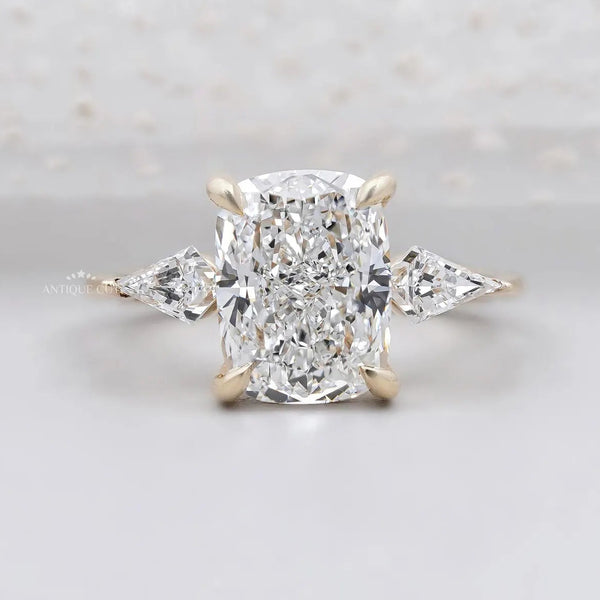
If you're also exploring engagement styles, three stone diamond engagement rings offer a classic design featuring three diamonds with a meaningful look.


How Much Is Labradorite Worth?
Labradorite does not have a fixed price. Its value depends on the quality of the stone, especially its labradorescence—the color that appears when light moves across its surface.
A smaller labradorite stone with a strong blue or multicolor flash can be worth more than a larger stone with weak color. For jewelry, the setting, metal, craftsmanship, and condition also affect the final price.
When judging the value of labradorite, look beyond size and focus on the quality, color, appearance, and condition of the stone.
How to Choose a Good Labradorite Stone
Choosing a good labradorite stone is about finding a piece that looks beautiful and is in good condition. Turn the stone slowly under natural or neutral lighting to see how its color changes. Look for a clear blue, green, gold, or multicolor flash that appeals to you. Also check the surface for deep cracks, chips, or other visible damage, as large fractures may affect durability. If you are buying a polished cabochon, make sure the surface is smooth and well finished so the color effect can be seen clearly.
For a higher-priced labradorite gemstone, ask the seller about its origin, treatments, and condition. Most importantly, choose a stone you personally enjoy looking at, since every piece of labradorite has its own pattern and color. If you're also exploring fine jewelry, browse our engagement ring collection for popular lab-grown diamond designs.
| Factor | What to Look For |
|---|---|
| Flash Strength & Color | Strong, vivid flashes with attractive blue or multicolor displays can increase a stone's appeal. |
| Labradorescence Coverage | More visible color across the stone can increase its appeal. |
| Clarity & Condition | A clean surface with fewer cracks, chips, or visible damage is preferred. |
| Size & Shape | Larger stones can be valuable, but size alone does not determine price. |
| Cut & Polish | A good cut and smooth polish can help show the stone's natural colors. |
| Origin & Material Quality | The source and overall quality of the rough material can affect value. |
| Jewelry Quality | The metal, setting, craftsmanship, and finishing also influence the final price. |
Labradorite vs Other Gemstones: What Makes It Different?
Labradorite and moonstone are both feldspar minerals, but their appearance is quite different. The easiest way to tell them apart is by looking at how light moves across the stone.
The main difference between these two stones is the way they reflect and show light. Labradorite is known for its visible flashes of blue, green, gold, and other colors, while moonstone usually shows a softer white or bluish glow across its surface.
This difference is easier to notice when the stones are viewed in person. As you move a labradorite stone, its color may appear and disappear at different angles. Moonstone tends to show a more even, gentle glow that shifts as the stone moves.
If you are buying labradorite, try to view it under natural or neutral lighting and from more than one angle. This gives you a better idea of the stone's actual color, flash, and overall quality than a single photograph can provide.
| Feature | Labradorite | Moonstone |
|---|---|---|
| Optical Effect | Colorful flashes called labradorescence | Soft glow called adularescence |
| Common Colors | Blue, green, gold, yellow, and gray | White, gray, cream, and peach |
| Base Appearance | Often gray or smoky | Usually light or translucent |
| Light Effect | Strong flashes that change with the angle | Gentle glow that seems to float across the surface |
| Overall Look | More colorful and dramatic | Softer and more subtle |
How to Clean and Care for Labradorite
Labradorite is easy to clean and does not need special products. For everyday dust and fingerprints, gently wipe the stone with a soft, damp cloth.
For deeper cleaning, use lukewarm water with a small amount of mild soap. Clean the surface gently, rinse away any soap, and dry it with a soft cloth.
Avoid harsh chemicals, abrasive cleaners, ultrasonic cleaners, and sudden temperature changes, as these can damage the stone. When storing labradorite jewelry, keep it in a soft pouch or separate compartment to prevent scratches.
How to Store Labradorite Jewelry Safely
Proper storage can help protect labradorite jewelry from scratches, chips, and accidental damage. Keep each piece in a soft pouch or a separate compartment so it does not rub against other jewelry.
If you have a labradorite ring or pendant with a larger stone, give it enough space and avoid storing it with harder gemstones that could scratch its surface. It is also best to remove labradorite jewelry before sports, heavy household work, gardening, or other activities where the stone could experience strong impact.
When you are not wearing it, keep labradorite jewelry in a cool, dry place and away from direct heat. These simple storage habits can help protect the polish, setting, and natural color display of the stone for a long time.
Final Thoughts
Labradorite is a gemstone that becomes more interesting the closer you look. Its gray or dark body can reveal flashes of blue, green, gold, and other colors as the stone moves under light, making every piece slightly different.
If you are choosing labradorite jewelry or a loose stone, consider its color flash, polish, surface condition, and how you plan to wear it. Because labradorite can scratch or chip with rough handling, proper care and storage are important.
Whether you love it for its changing colors, natural patterns, or traditional meaning, labradorite has a character that is easy to appreciate. Take a closer look, move it under the light, and you may see something new each time.
Design Your Own Jewelry with Antiquecut
Frequently Asked Questions
1. What Does Labradorite Do Spiritually?
Labradorite is often associated with protection, intuition, transformation, and inner strength in spiritual traditions.
2. Is Labradorite a Gemstone or a Stone?
Labradorite is a gemstone and a type of feldspar mineral. It is commonly cut and polished for jewelry and decorative pieces.
3. Is Labradorite Expensive?
Labradorite can range from affordable to expensive. Price depends mainly on its color flash, clarity, size, quality, and origin.
4. What Happens to Labradorite When It Gets Wet?
Brief contact with water is generally fine, but prolonged soaking is best avoided. Dry labradorite gently after it gets wet.
5. Is Labradorite Good for an Engagement Ring?
Labradorite can be used in an engagement ring, but it is softer and less durable than diamonds or sapphires, so it needs extra care.
6. What Is the Rarest Color of Labradorite?
Strong, vivid blue labradorescence is highly sought after. Rare specimens can also show unusual combinations of blue, green, gold, or multiple colors.
7. How Can You Tell If Labradorite Is Real or Fake?
Real labradorite usually shows natural color flashes that change as you move the stone under light. Unusually uniform or overly bright colors may indicate imitation.
8. Is Labradorite a Birthstone?
Labradorite is not an official traditional birthstone for any month. However, some people choose it as an alternative or spiritual birthstone.
9. Why Is Labradorite Considered Powerful?
Labradorite is considered powerful in crystal traditions because it is associated with protection, intuition, change, and personal growth.


