


If you are asking how much is a pink diamond worth, the honest answer is that the price can move from a few hundred dollars for a small lab grown pink diamond to well over six figures for a natural pink diamond with strong color. In 2026, pink diamonds sit in one of the most interesting parts of the diamond market because buyers are looking at them for engagement rings, collector pieces, custom jewelry, and heirloom-style designs.
A pink diamond is not priced like a regular white diamond. With white diamonds, buyers usually compare the 4Cs: carat, cut, color, and clarity. With pink diamonds, color strength becomes the biggest value driver. A small stone with rich pink color can be worth more than a larger stone with weak color. That is why two pink diamonds of the same carat weight can have completely different prices.
For engagement ring buyers, this can feel confusing at first. One pink diamond ring may cost $2,500, while another pink diamond engagement ring can cost $250,000 or more. The difference usually comes down to origin, color grade, carat size, certificate, rarity, and ring design.
This article explains pink diamond prices in 2026 in a simple way, including natural vs lab grown pricing, ring cost examples, USA buying tips, and what to check before paying for a diamond ring with pink diamond details.
Pink Diamonds Are So Rare
Pink diamonds do not get their color from trace elements the way blue diamonds get theirs from boron or yellow diamonds from nitrogen. The leading scientific theory points to a distortion in the crystal lattice a structural shift caused by extreme pressure deep within the earth that absorbs certain light wavelengths and reflects pink. That mechanism is rare by nature.
For decades, one mine kept the global supply alive: the Argyle mine in the East Kimberley region of Western Australia. At its peak, Argyle produced roughly 90 percent of the world's pink diamonds. When Rio Tinto permanently closed the mine in November 2020 after more than 35 years of operation, that supply effectively disappeared overnight.
New pink diamonds still come out of mines in Russia, Brazil, South Africa, and Canada but in volumes that are a fraction of what Argyle produced. That supply gap is not temporary. It is structural, and it is driving prices upward every year.
Why Pink Diamonds Cost More Than Many Other Diamonds
Pink diamonds are expensive because they are rare, difficult to source, and highly dependent on color quality. Unlike yellow diamonds, which are more available in the fancy-color market, pink diamonds appear in much smaller numbers. Natural pink diamonds with strong saturation are especially hard to find.
The pink color is also unusual. Many colored diamonds get their color from trace elements. Yellow diamonds get their color from nitrogen. Blue diamonds get their color from boron. Pink diamonds are different because their color is linked to structural distortion inside the diamond crystal. That rare formation condition is one reason natural pink stones are priced so high.
Another reason is supply. The Argyle mine in Australia was one of the most important sources of natural pink diamonds for decades. Since mining stopped there in 2020, new supply has become even more limited. Collectors, investors, and luxury jewelry houses now compete for fewer natural pink stones, especially those with strong color. This growing scarcity has also increased interest in distinctive jewelry styles, including a pink diamond old mine cut diamond ring, where the rare gemstone is paired with a vintage-inspired cut that highlights its unique character and collectible appeal.
What Makes a Pink Diamond More Valuable?

The value of a pink diamond depends on several factors working together. One factor alone does not decide the full price.
Color Strength
Color is the main driver. Pink diamonds may be described as Faint Pink, Very Light Pink, Light Pink, Fancy Light Pink, Fancy Pink, Fancy Intense Pink, Fancy Vivid Pink, Fancy Deep Pink, or Fancy Dark Pink. The stronger and more pleasing the pink color, the more valuable the diamond usually becomes. Fancy Intense Pink and Fancy Vivid Pink stones are often the most sought after.
Carat Weight
Carat weight matters, but it does not work alone. A 0.70 ct Fancy Vivid Pink diamond may cost more than a 1.50 ct pale pink diamond. With pink diamonds, size adds value only when the color also performs well. Large natural pink diamonds are extremely rare. That is why price per carat can jump sharply as size increases.
Shape
Shape affects both price and appearance. Cushion, radiant, oval, pear, emerald, and round pink diamonds are common choices for rings. Cushion and radiant shapes are often popular because they can hold color well. Oval and pear shapes can make the stone look larger on the finger. Emerald cuts show long lines and open facets, but they may show color differently.
Clarity
Clarity matters, but not as much as color. In pink diamonds, buyers often accept a lower clarity grade if the color is strong and the inclusions are not easy to see.
A VS or SI pink diamond may still be a good purchase if the face-up look is clean. For natural pink diamonds, a better clarity grade can add value, but color remains the main factor.
Certification
Certification is very important. For natural pink diamonds, a GIA report is highly trusted. It confirms natural origin, color grade, and whether the color is natural or treated. For lab-grown pink diamonds, IGI and GIA reports are commonly used. A certificate helps the buyer understand what they are paying for and makes comparison easier.
Setting and Metal
The ring setting can change the final cost. A simple solitaire pink diamond ring costs less than a halo ring, three-stone ring, or custom design with pavé diamonds. Rose gold can make pink tones feel warmer. White gold and platinum create stronger contrast. Yellow gold gives a richer color mix and can work well with certain pink shades.
Pink Diamond Price Table for 2026
The table below gives general price ranges. Actual prices can change based on color grade, carat weight, cut, shape, certificate, clarity, and whether the diamond is natural or lab grown.
| Pink Diamond Type / Ring Style | Estimated 2026 Price Range | Best For |
|---|---|---|
| Small Lab Grown Pink Diamond (Under 1 ct) | $300 – $1,500+ | Simple rings, pendants, earrings, and accent stones |
| 1 ct Lab Grown Pink Diamond | $700 – $3,500+ | Custom pink diamond ring designs |
| Lab Grown Pink Diamond Engagement Ring | $1,500 – $8,000+ | Buyers seeking larger size within budget |
| Small Natural Pink Diamond (Under 0.50 ct) | $10,000 – $50,000+ | Rare accents and collector jewelry |
| 1 ct Natural Pink Diamond | $100,000 – $500,000+ | Luxury engagement and collector rings |
| Fancy Intense or Vivid Natural Pink Diamond | $250,000 – $1M+ per carat | Investment-grade rare gemstones |
These are not fixed prices. A weak pink shade can cost much less than a strong pure pink. A brownish pink may be more affordable than a pure pink. A purplish pink may be valued higher if the color looks attractive and strong. The final price depends on how the stone looks in real life and how it is graded.
Is a Pink Diamond Engagement Ring a Good Choice?
A pink diamond engagement ring is a beautiful choice for someone who wants color, personal meaning, and a ring that feels different from a classic white diamond solitaire. Pink diamonds can feel romantic without needing an overly complex design.
For most buyers, lab grown pink diamonds make the most sense. They offer a strong look, better size options, and a more practical price. A custom lab grown diamond ring also gives more freedom for custom settings, such as halos, hidden accents, side stones, split shanks, or vintage-inspired bands.
Natural pink diamonds are best for buyers with a high budget and a strong interest in rarity. They are not the easiest choice for everyday engagement ring shopping because the price is high and selection is limited.
If you want an engagement pink diamond ring that balances price and beauty, start with lab grown options. If you want a natural stone, work with a jeweler who can source certified diamonds and explain color grades clearly.
Best Ring Styles for Pink Diamonds
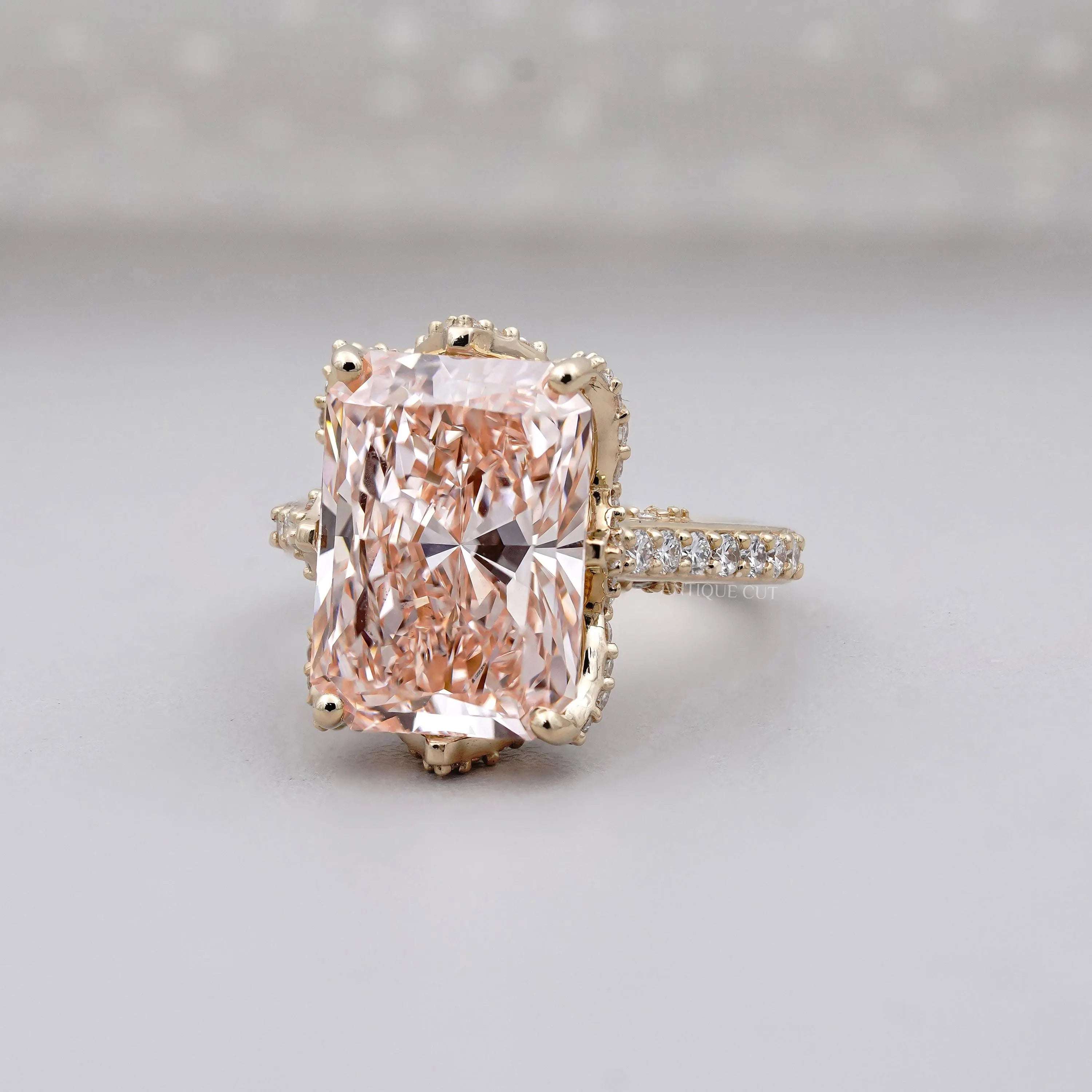
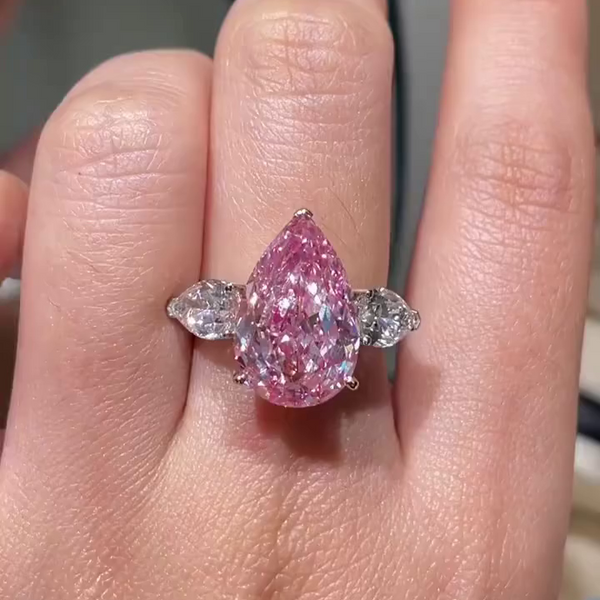
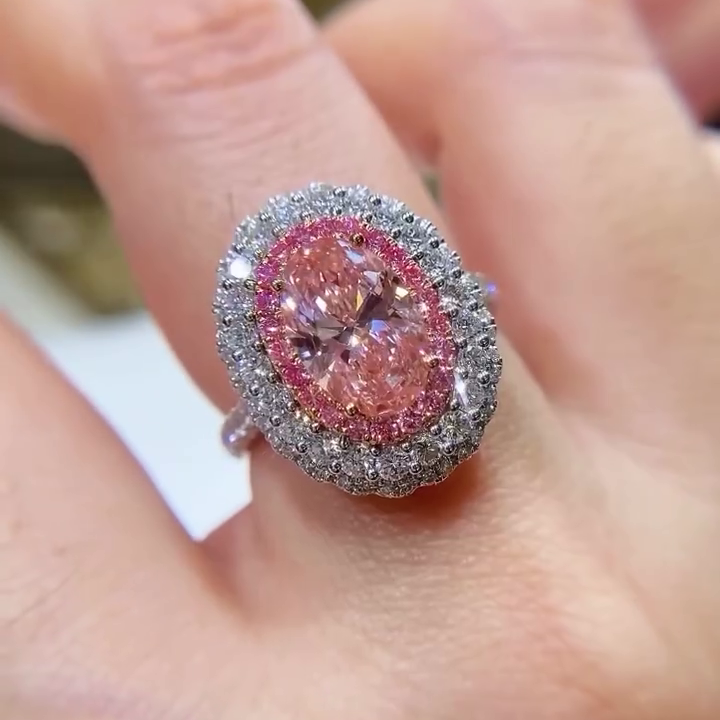
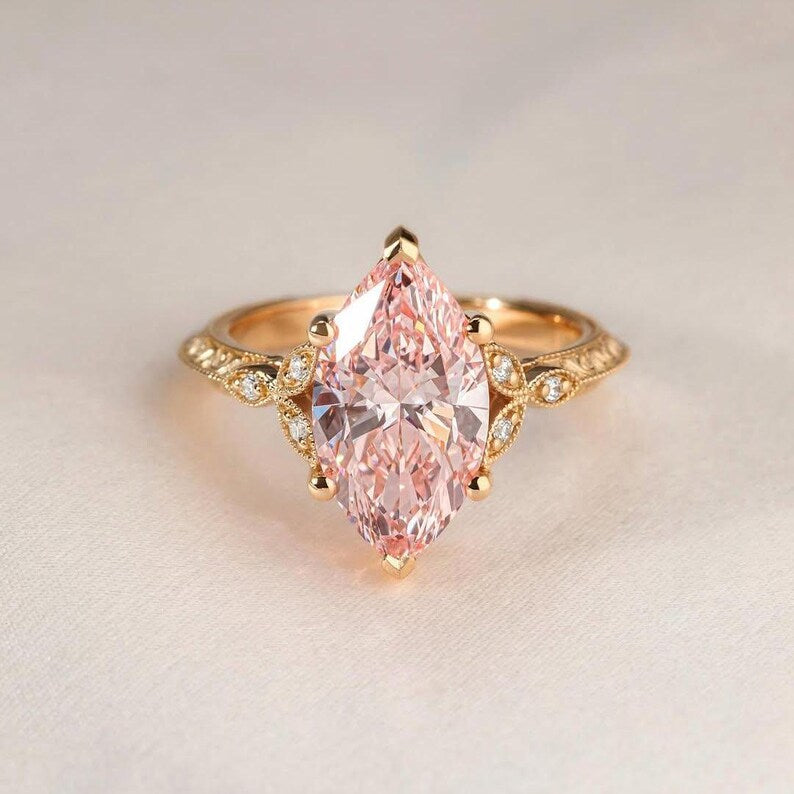
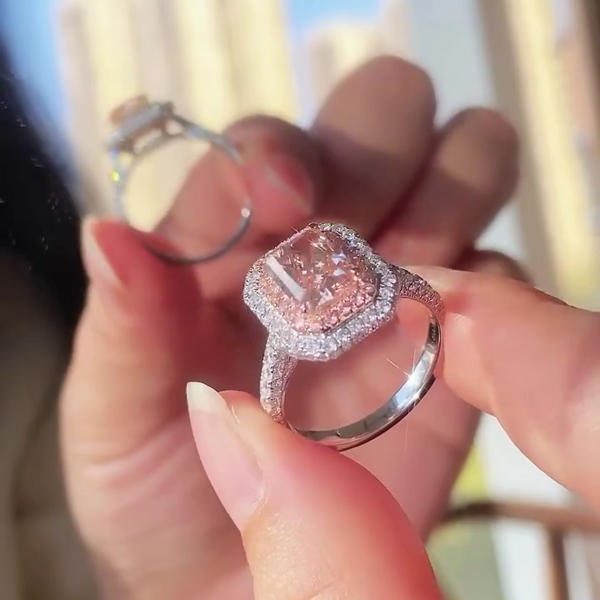
Pink diamonds work well in many ring styles, but some designs show color better than others.
A solitaire setting keeps full attention on the center stone. This is a good choice for a larger lab grown pink diamond or a rare natural stone.
A halo setting can make the center stone appear bigger and add contrast. White diamond halos are common around pink center stones because the white stones help the pink color stand out.
A three-stone ring can use a pink center diamond with white side stones, or a white center diamond with pink side stones. This is a good option when buyers want pink diamond jewelry without making the whole design too bold.
A bezel setting gives a clean, secure border around the diamond. This can work well for daily wear, especially with oval, pear, emerald, or radiant shapes.
A vintage-inspired setting can add character through milgrain, engraving, side details, or unique band shapes. This style is popular for buyers who want their pink diamond engagement ring to feel personal.
Are Pink Diamond Engagement Rings Worth Buying?
Yes, pink diamond engagement rings can be worth buying when the stone matches your budget and purpose.
For someone who wants a rare natural stone, a natural pink diamond ring can be a strong choice. It has rarity, character, and collector interest.
For someone who wants a beautiful ring with better size for the money, a lab-grown pink diamond engagement ring can be a practical choice. It allows more freedom with carat weight, shape, and setting.
The best ring is not always the most expensive one. The best ring is the one that gives the right balance of color, size, quality, certificate, and daily wear comfort.
Why Buyers Explore Antiquecut for Pink Diamond Jewelry
When choosing pink diamond jewelry, many buyers look for designs that balance color, certification, and setting quality in a clear way. Antiquecut focuses on creating pink diamond ring styles and lab grown diamond jewelry where attention is placed on stone selection, proportion, and ring structure rather than unnecessary complexity.
For buyers searching diamond ring with pink diamond, pink diamond ring, or a custom pink diamond engagement ring, the approach is usually centered around choosing the right combination of stone shape, metal tone, and certified quality. Lab grown pink diamonds allow more flexibility in size and design, especially for engagement-focused pieces where visual presence matters.
In engagement pink diamond rings, the setting plays an important role in how the color is perceived. White gold or platinum can enhance contrast, while rose gold can soften the overall tone. Antiquecut-style designs often explore these variations so buyers can align the ring with personal preference and wearability.
Conclusion
In 2026, pink diamond value continues to be shaped by rarity, color intensity, and origin. Natural pink diamonds remain among the most expensive fancy-color diamonds in the market, often reaching six-figure or even higher price ranges per carat for strong vivid stones. At the same time, lab grown pink diamonds have made this color more accessible, allowing buyers to explore larger sizes and attractive engagement designs at significantly lower prices.
Understanding how much is a pink diamond worth depends on knowing what you are actually comparing natural rarity or lab grown accessibility, strong vivid color or lighter pink tones, and collector value versus wearable jewelry value.
For engagement rings and personal jewelry, pink diamonds offer a wide design range. From minimal solitaire settings to detailed halo or vintage-inspired styles, each ring tells a different story through color and structure. The right choice comes down to budget, purpose, and the level of rarity you want in the piece.
FAQs
1. How much is a pink diamond worth in 2026?
A natural pink diamond can start around $100,000 per carat and go much higher depending on color intensity. Lab grown pink diamonds usually range from a few hundred to several thousand dollars per carat.
2. Is pink diamond expensive?
Yes, pink diamonds are among the most expensive diamonds in the world, but the price depends on whether the diamond is natural or lab grown.
3. What is the difference between natural and lab grown pink diamonds?
Natural pink diamonds are mined and extremely rare. Lab grown pink diamonds are created in controlled environments and offer similar appearance at a lower price.
4. Are lab grown pink diamonds valuable?
Yes, they have value as real diamonds, but they are priced lower because they are not naturally rare like mined pink diamonds.
5. Is a pink diamond good for engagement rings?
Yes, pink diamond engagement rings are popular for their unique color and romantic appeal. Lab grown options make them more accessible for buyers.
6. What affects the price of a pink diamond?
Color intensity, carat weight, clarity, shape, certification, and origin (natural or lab grown) all impact pricing.
7. Which pink diamond color is most expensive?
Fancy vivid pink diamonds are the most expensive because they have the strongest and most saturated color grade.
8. Can I buy a pink diamond ring on a budget?
Yes, lab grown pink diamond rings are available at more affordable prices, often starting from under $1,000 depending on size and design.
9. What is the best metal for a pink diamond ring?
Rose gold enhances warmth, while white gold or platinum creates contrast that highlights the pink color more clearly.
10. Is a pink diamond a good investment?
Natural pink diamonds can hold long-term collector value due to rarity. Lab grown pink diamonds are better suited for style and affordability rather than investment.


