


If you are shopping for a lab-created diamond, one question may come to mind: do lab grown diamonds pass a diamond tester just like natural diamonds? In most cases, yes. A lab-grown diamond can register as diamond on a standard diamond tester because it has essentially the same chemical composition, crystal structure, and physical properties as a diamond formed in nature. ten surprises shoppers who believe a diamond tester is designed to tell whether a stone came from the earth or a laboratory. That is not usually what a basic tester does.
Most handheld diamond testers check a physical property, commonly thermal conductivity. They help separate diamond from many common diamond imitations. Since natural and lab-grown diamonds both have diamond's physical characteristics, a standard tester may give a diamond reading for either one. Thermal testing alone is not normally enough to determine the stone's growth origin. ion is especially important for engagement ring shoppers in the USA, where buyers increasingly compare natural diamonds, lab-grown diamonds, moissanite, and cubic zirconia before placing an online order.
What Is a Lab Grown Diamond?
A lab grown diamond is a diamond that forms inside a controlled facility instead of underground. The process uses one of two methods: High Pressure High Temperature (HPHT), which recreates the heat and pressure conditions found deep in the earth, or Chemical Vapor Deposition (CVD), which builds a diamond crystal layer by layer inside a chamber filled with carbon-rich gas. Both methods start with a small diamond seed and grow it into a full crystal over a period of weeks to a few months.
So what is a lab diamond made of, exactly? Pure carbon, arranged in the same cubic crystal lattice found in a mined diamond. There is no plastic, resin, or glass involved, and it isn't the same thing as a diamond simulant like cubic zirconia or moissanite, which are different minerals entirely. Once a lab grown crystal reaches the right size, it gets cut and polished by the same diamond cutters who shape natural stones, using the same equipment.
The finished product is graded by an independent laboratory, usually GIA or IGI, using the same 4Cs standards cut, color, clarity, and carat weight applied to natural diamonds. The only difference between a lab grown diamond and a mined diamond is where the crystal formed: in a laboratory rather than deep within the earth's mantle. This consistent grading system makes it easier for buyers to compare quality when shopping for lab grown diamond rings under $4000, offering excellent value without compromising on certified diamond standards.

Explore Antiquecut's Signature Diamond Ring Collection
Browse handcrafted engagement rings featuring radiant, cushion, oval, emerald, pear, marquise, and other distinctive diamond cuts created with exceptional attention to detail.
Explore Collection →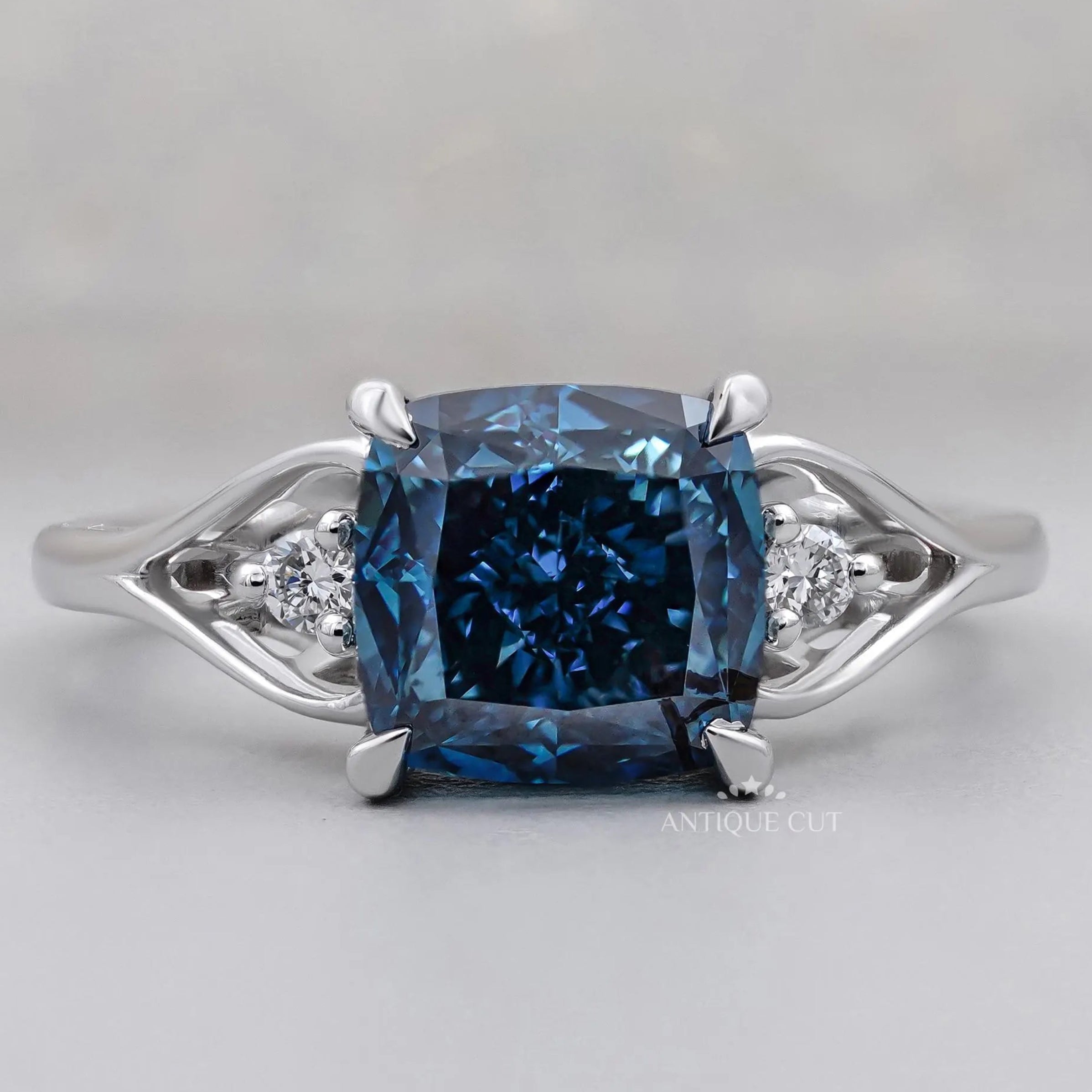
Discover Antiquecut's Most Loved Diamond Rings
Explore customer-favorite engagement rings crafted with premium quality, exceptional craftsmanship, and beautiful diamond designs for every love story.
Shop Best Sellers →Is a Lab Grown Diamond a Real Diamond?
This is where a lot of confusion starts, and it's worth settling clearly: yes, is a lab grown diamond a real diamond is not really up for debate anymore. The U.S. Federal Trade Commission updated its jewelry guidelines specifically to confirm that lab grown diamonds are diamonds. Retailers are not permitted to call them "synthetic" or "fake" without also stating that the term refers only to origin, not composition.
Chemically, a lab grown diamond and a natural diamond are identical. Both score a 10 on the Mohs hardness scale. Both bend light at the same 2.42 refractive index, which is why they produce the same fire and brilliance. Both conduct heat at nearly the same rate. A trained gemologist cannot tell them apart with a loupe, and even a jeweler with decades of experience needs specialized lab equipment to confirm origin. The difference is time and location, not the material itself. A natural diamond took roughly one to three billion years to form under the earth's crust; a lab grown diamond takes a few weeks to a few months to grow in a facility. Once the crystal exists, physics doesn't know or care how it got there.
How to Test a Diamond: Methods That Actually Work
If you're trying to figure out how to test a diamond, it helps to separate two different questions: "is this diamond, or a fake?" and "is this diamond natural, or lab grown?" A handheld tester answers the first question well. It cannot answer the second. Here's a quick comparison of the methods people commonly use, and what each one can actually tell you.
| Testing Method | What It Actually Checks | Confirms Diamond vs. Simulant | Confirms Natural vs. Lab Grown |
|---|---|---|---|
| Thermal/Electrical Diamond Tester | Heat and electrical conductivity | ✔ Yes | ✖ No |
| 10× Jeweler's Loupe | Inclusions, girdle inscription, cut quality | Partially, with training | Only via laser inscription |
| UV Fluorescence Light | Glow color and intensity under UV light | ✖ No, just a clue | ✖ No, just a clue |
| DiamondView Imaging | Growth pattern and fluorescence zoning | N/A | ✔ Yes |
| FTIR or Raman Spectroscopy | Trace element and defect signatures | N/A | ✔ Yes |
| GIA or IGI Certification Report | Full grading plus verified origin | ✔ Yes | ✔ Yes |
For everyday buyers, the certification report is the tool that matters most. A loupe and a diamond tester are useful for a quick reality check at a pawn shop or estate sale, but they were never built to answer the origin question. If you want certainty, ask to see the grading report and match its report number to the laser inscription on the stone itself. Reputable jewelers will show you both without hesitation.
Do Lab Grown Diamonds Pass a Diamond Tester?
Yes. A lab grown diamond passes a standard diamond tester because thermal conductivity and electrical conductivity are properties of the carbon crystal itself, and a lab grown stone has the exact same crystal structure as a mined one. The tester isn't measuring age or origin it's measuring physics, and the physics is identical. So when someone asks do lab grown diamonds pass a diamond tester, the honest answer is that they pass it precisely because they are real diamond, not despite it.
This is actually useful information for buyers who are worried about the opposite scenario: being sold glass, cubic zirconia, or moissanite dressed up as a diamond. A positive reading on a diamond tester rules those simulants out. What it does not do is confirm that the stone is natural. A tester that reads "diamond" is telling you the truth about the material and says nothing about how that material was formed. Whether you're choosing a classic solitaire or a pave lab diamond ring, the certification and grading report remain the most reliable way to verify a diamond's origin.
Is Lab Grown Diamond Real? Common Myths, Answered
A few myths keep circulating, so it's worth addressing them directly, because is lab grown diamond real is still one of the most searched questions in this category. "It's basically fake, like cubic zirconia." This isn't accurate. Cubic zirconia is a completely different mineral zirconium dioxide with different hardness, weight, and optical properties. A lab grown diamond is carbon, just like a mined one.
"It won't last as long or hold up as well." Also not true. Hardness, durability, and resistance to scratching are identical between lab grown and natural diamonds, because they're the same material. A lab grown diamond will not cloud, dull, or degrade with normal wear. "Jewelers can always spot one instantly." Trained gemologists often cannot tell the difference by eye or loupe alone. It takes lab-grade equipment or the laser inscription to confirm origin with certainty, which is exactly why certification matters so much in this market.
Choosing a Lab Grown Diamond Ring from Antiquecut
Understanding do lab grown diamonds pass a diamond tester is useful, but choosing the right ring also requires clear diamond details and proper product information. At Antiquecut, shoppers can explore lab grown diamond engagement rings in different diamond shapes, carat sizes, metal options, and setting styles.
Each buyer may have a different priority. Some want a larger center diamond while controlling the overall ring budget. Others focus on a specific shape such as oval, emerald, radiant, cushion, or round cut. Ring setting choices, including solitaire, hidden halo, three-stone, bezel, and pavé designs, can also change the appearance and final price of the ring.
When comparing a lab grown diamond ring, review the diamond specifications rather than depending only on a handheld tester. Check the carat weight, color, clarity, measurements, growth origin, and available grading information.
Final Thoughts
So, do lab grown diamonds pass a diamond tester? Yes, every time, because a diamond tester was built to identify diamond as a material, not to trace its origin. That's good news if you're worried about being sold a simulant, and it's a reminder that the real question worth asking before you buy isn't whether a stone will pass a tester both lab grown and natural diamonds will. The real question is whether you have a trustworthy certificate, a laser inscription you can verify, and a retailer willing to show you both without being asked twice.
FAQs
1. Do lab grown diamonds pass a diamond tester?
Yes. Standard thermal and electrical diamond testers check whether a stone is diamond, and lab grown diamonds share the exact same carbon structure as natural ones, so they register as diamond every time.
2. Is a lab grown diamond a real diamond?
Yes. The FTC classifies lab grown stones as diamonds, not imitations. They share identical chemical, physical, and optical properties with natural diamonds the only difference is where and how they formed.
3. How can I tell if my diamond is lab grown or natural?
Check the girdle under a 10x loupe for a laser inscription, and match it to the report number on your GIA or IGI certificate. That's the only reliable way for a typical buyer to confirm origin without lab equipment.
4. Will a basic diamond tester catch a moissanite instead of flagging origin?
Older single-mode thermal testers occasionally struggled with moissanite because it conducts heat almost as fast as diamond. Most modern testers now check electrical conductivity too, which correctly separates moissanite from real diamond, lab grown or natural.
5. Do lab grown diamonds hold their value?
They hold some value but typically far less resale percentage than natural diamonds, since supply isn't limited the way mined diamonds are. If resale matters to you, factor that in before buying.
6. Are lab grown diamonds lower quality because they're cheaper?
No. The lower price reflects production economics, not lower quality. In fact, lab grown stones often show excellent color and clarity because growing conditions can be tightly controlled.
7. Can a pawn shop diamond tester be trusted when selling a ring?
It can confirm the stone is genuine diamond material, which rules out glass or cubic zirconia, but it cannot confirm natural origin. If you're selling, bring your certification report so the buyer isn't relying on the tester alone to value your piece.


