


Diamonds are available in many shapes and cutting styles, but few are as recognized and widely chosen as the brilliant cut. Known for its carefully designed facets and ability to reflect light effectively, the brilliant cut remains one of the most popular choices for engagement rings and fine jewelry.
For those asking what is a brilliant cut diamond, it refers to a diamond cutting style designed with numerous triangular and kite-shaped facets arranged to maximize light reflection. This cutting technique creates a balanced appearance with strong brightness and visual appeal, making it a preferred option for many diamond buyers.
What Is a Brilliant Cut Diamond?
A brilliant cut diamond is a diamond that has been shaped and polished using a specific facet arrangement created to enhance light return. Instead of focusing only on the outline of the stone, the brilliant cut focuses on how light enters, moves through, and exits the diamond.
The most recognized example of this style is the round brilliant cut diamond. However, brilliant cutting techniques are also used in other diamond shapes, including oval, pear, marquise, cushion, and heart shapes.
A well-cut brilliant diamond contains precisely positioned facets that work together to create strong brightness. The quality of the cut plays a major role in determining how the diamond appears from different angles. When paired with a lab created hidden halo diamond ring setting, the brilliant cut diamond gains additional dimension and visual appeal through carefully placed accent stones beneath the center diamond.
History and Development of Brilliant Cut Diamonds
The development of brilliant cut diamonds changed the way diamonds were shaped and appreciated. Early diamond cuts focused more on preserving the weight of the rough stone, but later cutting methods placed greater attention on improving light performance.
The round brilliant cut became highly refined through years of research into diamond proportions, symmetry, and facet placement. Diamond cutters studied how light behaves inside a stone and developed cutting patterns that allow more light to return through the top surface. Today, buyers exploring diamond engagement rings under 1000 can find beautifully designed options with brilliant cut diamonds that balance appearance, quality, and budget.
Today, brilliant cut diamonds represent a combination of traditional craftsmanship and advanced diamond cutting methods.
How Brilliant Cut Diamonds Are Designed
Diamond cutting requires precision because every facet affects how the stone interacts with light. A brilliant cut diamond follows specific proportions that influence its overall appearance.
Table
The Flat Surface At The Top Of The Diamond.
Crown
The Upper Part Of The Diamond Above The Girdle.
Girdle
The Outer Edge Between The Crown And Pavilion.
Pavilion
The Lower Part Of The Diamond Below The Girdle.
Culet
The Small Point At The Bottom Of The Diamond.
Depth
The Total Height From The Table To The Bottom Of The Diamond.
What Is the Best Cut Grade for a Round Brilliant Diamond?

For a standard round brilliant, cut grade deserves serious attention because it evaluates how effectively the diamond’s proportions, design, and craftsmanship work together.
GIA uses five cut grades for qualifying standard round brilliant diamonds in the D-to-Z color range:
Excellent, Very Good, Good, Fair, and Poor.
Many engagement ring buyers begin their search within Excellent or Very Good.
However, buyers should understand that two diamonds carrying the same overall cut grade can still look different.
Their crown angles, pavilion angles, table sizes, measurements, patterning, clarity characteristics, fluorescence, and other specifications may not be identical.
This is why the grading report should be treated as part of the evaluation rather than the entire decision.
Natural vs Laboratory-Grown Brilliant Cut Diamonds
Natural and laboratory-grown brilliant cut diamonds differ mainly in origin, pricing, and availability. Natural diamonds form beneath the earth, while lab-grown diamonds are created using advanced technology. Both can be certified and evaluated by cut, color, clarity, and carat.
Lab-grown diamonds may offer more flexibility for buyers seeking larger sizes or higher specifications within a budget, while natural diamonds appeal to those who prefer geological origin. Antiquecut provides engagement ring options with different diamond styles and settings.
What Determines Brilliant Cut Diamond Price?
The brilliant cut diamond price depends on factors such as carat weight, cut quality, color, clarity, certification, polish, symmetry, fluorescence, and market conditions.
For a brilliant cut diamond ring, the final cost also includes the setting, metal type, side stones, pavé details, hidden halo designs, and customization. Buyers looking for affordable custom-made diamond rings under $4,000 can explore different design options by balancing diamond specifications, ring features, and personalized details within their budget.
Natural and lab-grown diamonds have different pricing structures, so buyers should compare diamonds within the same category for accurate value.
Brilliant Cut Diamond Shapes Compared
Brilliant faceting is not limited to round diamonds. Several popular shapes use brilliant or modified brilliant facet arrangements.
| Diamond Shape | Common Faceting Style | Face-Up Appearance | Important Buying Factor |
|---|---|---|---|
| Round | Brilliant | Circular and symmetrical | Cut grade, table, depth, symmetry |
| Oval | Modified brilliant | Elongated with broad finger coverage | Bow-tie visibility, ratio, symmetry |
| Pear | Modified brilliant | Rounded end with pointed tip | Tip protection, bow-tie, symmetry |
| Marquise | Modified brilliant | Long shape with two pointed ends | Bow-tie, point alignment, symmetry |
| Heart | Modified brilliant | Two lobes with a pointed base | Lobe balance, cleft, symmetry |
| Cushion | Brilliant or modified brilliant | Square or rectangular with rounded corners | Facet pattern, depth, face-up size |
| Radiant | Modified brilliant | Square or rectangular with cut corners | Facet arrangement, depth, ratio |
How to Choose a Brilliant Cut Diamond Ring
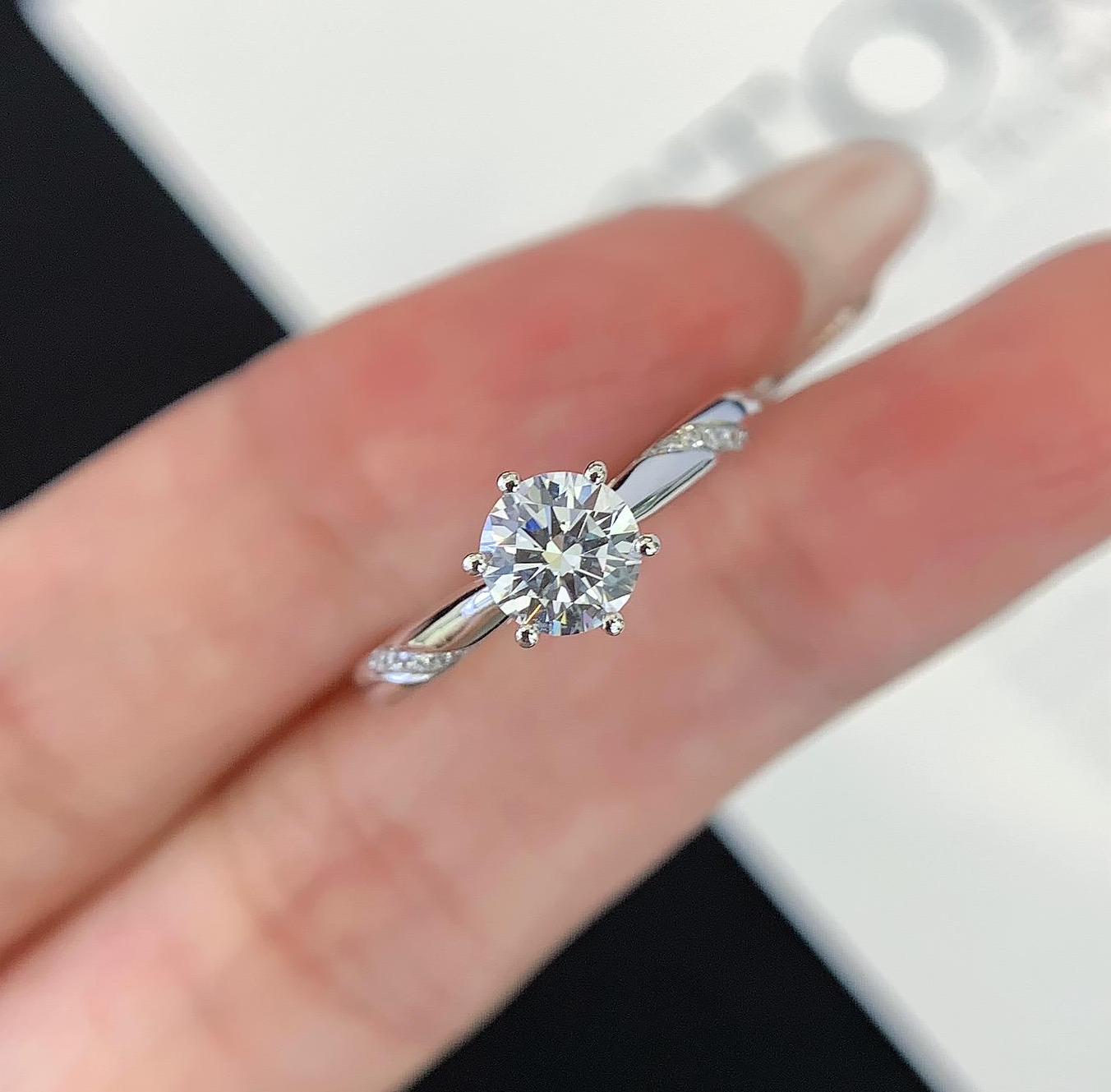
Choosing a brilliant cut diamond ring starts with selecting the preferred shape, such as round, oval, pear, cushion, or marquise. Set a complete ring budget, then focus on important diamond factors like cut quality, symmetry, clarity, and measurements.
For round brilliant diamonds, cut quality is especially important. Elongated shapes should be checked for symmetry and bow-tie effects. Finally, select a setting that complements and protects the diamond while matching your style.


Final Buying Checklist
Before buying a brilliant cut diamond, check its carat, color, clarity, cut, measurements, symmetry, polish, certification, and origin. For round diamonds, focus on cut quality and proportions. For fancy shapes, also review symmetry, bow-tie effect, and face-up appearance.
Consider the full ring cost, including the setting, metal, side stones, taxes, resizing, shipping, and insurance. Choose a well-balanced diamond instead of focusing on only one high grade.
Conclusion
A brilliant cut diamond represents one of the most recognized diamond cutting styles because of its carefully engineered facet design and strong light reflection. Understanding what is a brilliant cut diamond helps buyers make informed decisions when selecting engagement rings and fine jewelry.
From round brilliant designs to customized ring styles, brilliant cut diamonds offer a wide range of options for different preferences and budgets. By considering cut quality, certification, size, and setting style, buyers can choose a diamond that matches their expectations.
FAQs
What is a brilliant cut diamond?
A brilliant cut diamond is fashioned with a facet arrangement intended to return a high amount of light through the top of the stone. Round brilliant is the most familiar version, but oval, pear, marquise, heart, cushion, and radiant shapes can also use brilliant or modified brilliant faceting.
Is a brilliant cut diamond always round?
No. Round brilliant is the best-known version, but brilliant-style faceting can be applied to several diamond shapes. Oval, pear, marquise, cushion, heart, and radiant stones commonly use brilliant or modified brilliant facet structures.
How many facets does a round brilliant diamond have?
A standard round brilliant generally has 57 facets. It may have 58 when an additional culet facet is present at the bottom of the pavilion.
Is brilliant cut the same as diamond shape?
No. Diamond shape refers to the outline of a stone, while brilliant refers to a faceting style. The term “round brilliant” combines the round shape with brilliant-style faceting.
Why does brilliant cut diamond price vary?
Brilliant cut diamond price varies according to factors such as carat weight, cut quality, color, clarity, measurements, diamond origin, certification, fluorescence, market conditions, and individual stone characteristics. A finished ring also includes the cost of the setting and any additional diamonds.
What affects round brilliant cut diamond price?
Carat, cut, color, clarity, origin, measurements, certification, and market demand all contribute to round brilliant cut diamond price. Cut deserves close attention because it has a direct relationship with the face-up appearance of a round brilliant.
Are laboratory-grown brilliant cut diamonds real diamonds?
Yes. Laboratory-grown diamonds have diamond crystal structure and can be fashioned into round brilliant and other diamond shapes. Their origin differs from natural diamonds and should be clearly disclosed in the grading and sales documentation.
Is Excellent always the best round brilliant cut grade?
Excellent is the highest GIA cut grade for qualifying standard round brilliant diamonds, but not every diamond within the grade will look identical. Buyers should still compare proportions, measurements, videos, clarity placement, fluorescence, and overall appearance.
Do oval and pear diamonds receive the same cut grade as rounds?
GIA does not provide the same standardized overall cut grade for fancy shapes such as oval, pear, heart, and marquise that it provides for qualifying standard round brilliant diamonds. Visual inspection, symmetry, proportions, outline, and bow-tie visibility therefore become particularly important.
Which brilliant cut is best for an engagement ring?
There is no single shape that is best for every person. Round works well for buyers who want extensive cut information and a symmetrical outline. Oval and marquise can provide greater length, pear offers a distinctive pointed profile, while cushion, radiant, and heart shapes provide different outlines and internal patterns.
What should I check before buying a brilliant cut diamond ring online?
Review the grading report, actual diamond images or video, millimeter measurements, cut information, color, clarity, return terms, setting specifications, production time, shipping method, insurance coverage, resizing policy, and final checkout cost.


