


The shape of half moon is one of the most recognizable and distinctive diamond forms used in fine jewelry. Known for its curved outer edge and straight inner side, this diamond shape has become a preferred choice for designers who want to create balanced and visually appealing jewelry pieces. Whether featured as side stones or incorporated into unique ring designs, half moon diamonds offer a striking appearance that complements a variety of center stones.
The growing interest in the shape of half moon can be linked to its versatility and ability to enhance the overall structure of a jewelry piece. From classic diamond settings to contemporary custom creations, this cut continues to attract attention among collectors and buyers. Understanding its characteristics, cutting style, and applications can help jewelry enthusiasts make informed decisions when selecting a diamond. In this article, we will explore the defining features of the shape of half moon, its role in jewelry design, and the factors that contribute to its lasting popularity in fine jewelry collections. We will also look at how antiquecut incorporates this distinctive diamond shape into thoughtfully crafted pieces that highlight its unique appeal and versatility.
What Defines the Shape of Half Moon?
The shape of half moon resembles exactly what its name suggests a crescent-like form that appears as half of a circular or oval shape. It features one straight edge and one curved edge, creating a symmetrical silhouette that works exceptionally well alongside larger center diamonds. This design allows jewelers to use half moon diamonds as accent stones that frame and enhance the primary gemstone. A half moon diamond is carefully crafted to maximize brilliance while maintaining its unique profile. Precision is important during the cutting process because both sides must remain balanced. The arrangement of facets plays a major role in how light travels through the stone, influencing its visual appeal and overall appearance.
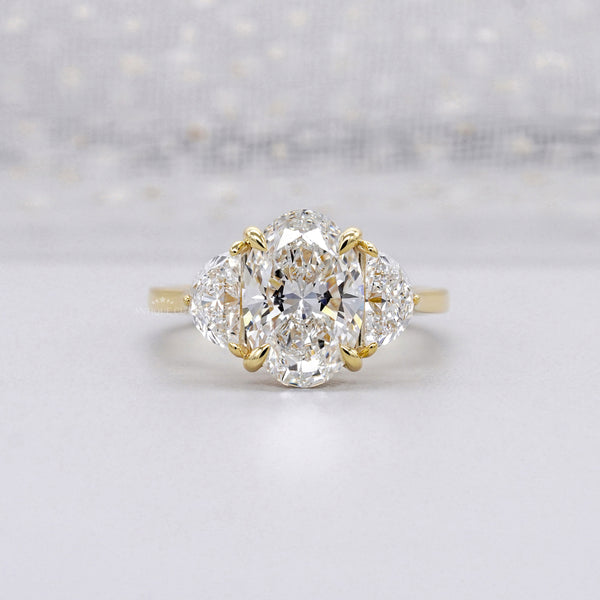

Side stone gold ring


Side stone Two tone ring
The process often referred to as half moon cutting requires skilled craftsmanship. Diamond cutters must carefully shape the stone while preserving as much rough material as possible. Achieving proper symmetry and proportions ensures that the finished diamond maintains its distinctive look while offering excellent light performance.
The History Behind Half Moon Diamonds
The use of uniquely shaped gemstones has existed for centuries, but the half moon diamond gained significant popularity as jewelry designers explored creative alternatives to traditional cuts. As gemstone cutting techniques improved, craftsmen began producing more precise and symmetrical half moon diamonds. These stones became highly valued for their ability to complement center diamonds without overpowering them. Today, their balanced appearance continues to be appreciated in a variety of jewelry styles, including custom designs and lab grown engagement rings under $1000, where carefully selected side stones can enhance the overall look while maintaining visual harmony. Today, half moon diamonds remain a favored choice among those seeking distinctive jewelry with architectural appeal and refined proportions.
Why Half Moon Diamonds Are Popular
A half moon diamond offers several characteristics that make it desirable in fine jewelry:
- Distinctive shape that stands apart from traditional cuts
- Complements many center stone styles
- Creates balanced and symmetrical designs
- Enhances overall visual appeal
- Works well in both classic and contemporary jewelry pieces
Its adaptability makes it a favorite among designers looking to create jewelry with character and refinement.

Understanding Half Moon Cutting
The process of half moon cutting requires exceptional precision. Unlike standard diamond shapes, the cutter must achieve perfect symmetry between the curved edge and the straight side. Every angle and facet placement affects the appearance of the finished stone. The cutter carefully plans the proportions to ensure proper light performance while maintaining the desired shape. The quality of half moon cutting influences:
- Symmetry
- Light return
- Brilliance
- Visual proportions
- Overall appearance
Because of these challenges, well-cut half moon diamonds are highly valued in fine jewelry.
Half Moon Engagement Ring Designs
A half moon engagement ring remains one of the most sought-after styles featuring this distinctive gemstone shape. In many designs, two half moon diamonds flank a center stone, creating a three-stone arrangement that highlights the primary diamond while adding width and presence to the ring.
Benefits of a half moon engagement ring include:
Enhanced Center Stone Appearance
Half moon diamonds naturally direct attention toward the center gem, making it appear more prominent.
Balanced Proportions
The symmetrical placement of half moon side stones creates a harmonious overall design.
Unique Visual Character
The curved outlines introduce a distinctive look that differs from traditional side stone arrangements.
Additional Brilliance
The faceting of half moon diamonds contributes extra light reflection and dimension.
Custom Jewelry Featuring Half Moon Diamonds
Custom jewelry provides an excellent opportunity to showcase the beauty of the shape of half moon.
Designers frequently incorporate half moon diamonds into:
- Engagement rings
- Wedding bands
- Earrings
- Pendants
- Anniversary jewelry
- Statement rings
The versatility of the shape allows for creative combinations that reflect personal style while maintaining strong visual structure.
Why Collectors Appreciate Half Moon Diamonds
Collectors often seek half moon diamonds because they represent a distinctive category within fancy-shaped gemstones. Their appeal comes from:
- Unique geometry
- Specialized cutting requirements
- Strong design versatility
- Balanced appearance
- Excellent pairing capabilities
These qualities help explain the lasting demand for high-quality half moon diamonds in fine jewelry collections.
The Lasting Significance of the Shape of Half Moon
The shape of half moon continues to hold an important place in fine jewelry due to its unique combination of structure and visual flow. Whether incorporated into a half moon diamond ring, featured within a half moon engagement ring, or showcased in a creative diamond moon ring, this gemstone shape offers remarkable design flexibility. Through expert half moon cutting, jewelers transform rough diamonds into sophisticated gemstones that enhance both classic and custom jewelry creations. As interest in distinctive diamond shapes continues to grow, the half moon diamond remains a compelling choice for those seeking beauty, balance, and individuality in fine jewelry.
Choosing Fine Jewelry with Half Moon Diamonds
When selecting jewelry featuring the shape of half moon, consider factors such as symmetry, cut quality, and how the stones complement the overall design. Well-crafted half moon diamonds should display balanced proportions and attractive light performance. At Antiquecut, carefully selected diamonds and thoughtful craftsmanship come together to create jewelry that highlights the beauty of unique diamond shapes while maintaining exceptional quality and attention to detail.
Conclusion
The shape of half moon has earned a respected place in fine jewelry through its distinctive appearance and versatility. Characterized by a curved outer edge and straight inner side, it serves as both an accent stone and a design feature in a wide range of jewelry styles. From the carefully executed half moon cutting process to its application in a half moon engagement ring or half moon diamond ring, this diamond shape continues to appeal to those seeking unique craftsmanship and thoughtful design. Its compatibility with various center stones, balanced proportions, and creative possibilities make it a lasting favorite among jewelry designers and buyers alike. Understanding the shape of half moon provides valuable insight into one of the most distinctive diamond forms used in fine jewelry today.
Design Your Own Engagement Ring
Craft a ring that reflects your story with lab grown diamonds and custom design options.
Explore CollectionFAQS
1. What is the shape of half moon in jewelry?
The shape of half moon is a diamond cut featuring one straight edge and one curved edge, creating a design that resembles half of a circle.
2. What is a half moon diamond used for?
A half moon diamond is commonly used as a side stone in engagement rings, helping enhance and frame the center diamond.
3. How is half moon cutting different from other diamond cuts?
Half moon cutting creates a unique curved shape that differs from traditional round, oval, or cushion cuts while maintaining attractive light reflection.
4. Are half moon diamonds suitable for engagement rings?
Yes, a half moon engagement ring is a popular choice because the side stones create balance and complement many center stone shapes.
5. What center stones pair well with half moon diamonds?
Half moon diamonds pair beautifully with oval, emerald, radiant, cushion, and pear-shaped center stones.
6. Can a half moon diamond ring feature a half moon diamond as the main stone?Yes, although half moon diamonds are often used as accent stones, they can also serve as the focal point in custom ring designs.
7. What makes a diamond moon ring unique?
A diamond moon ring often incorporates moon-inspired elements, and half moon diamonds naturally complement these designs due to their curved silhouette.
8. Do half moon diamonds appear larger than other diamond shapes?
Their elongated curved profile can create a broader visual appearance, especially when placed alongside a center stone.
9. How do I choose a high-quality half moon diamond?
Look for excellent symmetry, well-proportioned dimensions, and a cut that displays consistent brilliance across the stone.
10. Why are half moon diamonds popular in fine jewelry?
Half moon diamonds are valued for their distinctive shape, versatility, and ability to create balanced and visually appealing jewelry designs.


