


If you have spent any time looking at engagement rings, you have almost certainly seen a cathedral setting without knowing its name. It is one of the most popular ways to hold a center stone, and for good reason. The arches that rise up to cradle the diamond give the ring a graceful, architectural shape that catches the eye from across a room. This guide walks through the main types of cathedral ring settings, what makes each one different, and how to decide which style fits your stone, your budget, and your everyday life. We will also compare cathedral and non-cathedral options, look at which diamond shapes pair best, and cover the practical stuff like comfort, metal choice, and long-term care. By the end you should feel confident enough to shop with a clear picture of what you actually want.
What Is a Cathedral Ring Setting
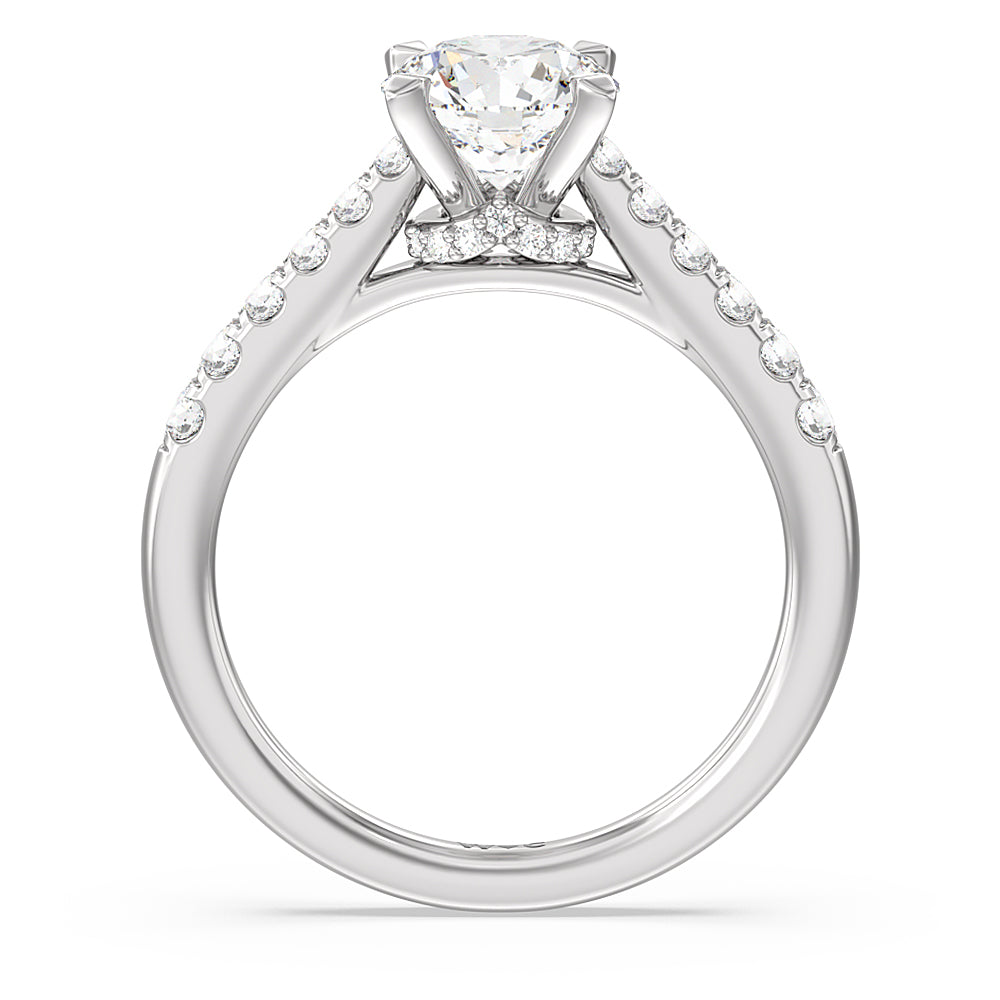
A cathedral ring setting takes its name from church architecture. Just as a cathedral uses sweeping arches to lift the eye upward, this style uses two graceful supports that rise from the band to meet the center stone. Those arches are the defining feature, and they are the first thing to look for when you want to spot one. So what is a cathedral ring setting in plain terms? It is any ring where the metal of the band curves up on either side to hold the diamond higher than a flat or basic prong mount would.

The center stone still sits in prongs, a bezel, or another holding method, but the cathedral arches frame it and add height. People often confuse the arches with side stones, but the arches themselves are usually solid metal, not gemstones. Because the design has been around for generations, you will find a cathedral setting ring across a huge range of price points and styles, from simple solitaires to elaborate vintage-inspired pieces. The shape is flexible, which is exactly why it has stayed in fashion for so long.
Why Cathedral Settings Matter
The cathedral style is not just a pretty detail. It changes how the ring performs and how it looks on the hand, and those differences matter when you are spending real money on a piece you plan to wear every day. First, the arches add structure. They give the center stone extra support, which can be reassuring if you have an active lifestyle or a larger diamond. Second, the raised profile lets light reach the stone from more angles, which can make the diamond look brighter. Third, the design creates visual height, so a modest stone can appear a little larger than it would in a flat mount. There is also a craftsmanship angle. Cathedral settings show off a jeweler's skill because the arches have to be shaped, polished, and aligned with the band in a clean, symmetrical way. A well-made one feels intentional and refined. A poorly made one looks clunky. That contrast is worth keeping in mind as you shop.
How Cathedral Settings Affect Your Ring
Before getting into the specific types of cathedral ring settings, it helps to understand how the basic structure shapes the wearing experience. The arches influence three things in particular.
- Profile height. Cathedral rings sit taller than plain solitaires. That added height is part of the look, but it also means the ring may catch on gloves, pockets, or hair more than a low-profile design would.
- Light flow. Because the stone is lifted and the sides are open, light can enter from below and around the diamond. Open arches generally help compared with a closed, heavy gallery.
- Perceived size. The framing effect of the arches can make the center stone look more prominent. It does not change the carat weight, but it changes the impression.
None of these are downsides on their own. They are trade-offs, and whether they work for you depends on your habits and taste. Someone who works with their hands all day will weigh height differently than someone who sits at a desk.
Types of Cathedral Ring Settings
Now to the heart of it. Cathedral is a category, not a single design, and within it there are several recognizable styles. Below are the most common types of cathedral ring settings, each with its own personality. Many of these can be combined, so do not treat them as rigid boxes. Think of them as building blocks.
Classic Cathedral Setting
The classic version is the purest form of the style. Two smooth arches rise from a plain band and hold a single center stone, usually in four or six prongs. There are no extra gemstones and no fancy detailing on the band. The beauty here is in the clean lines and the way the arches frame the diamond.
This is a strong choice if you love, uncluttered look. It also tends to be the most affordable cathedral option because there is less metal work and no additional stones. A classic cathedral setting ring suits almost any diamond shape and ages well, since it does not lean on any passing trend.
Cathedral Setting with Side Stones
Here the arches or the band carry small accent stones alongside the center diamond. The side stones might be set into the arches themselves or run along the shoulders of the band leading up to them. The result is a richer overall look. This style works beautifully when you want extra brilliance without jumping up to a larger center stone. The accent stones draw the eye toward the middle and can make the whole ring feel more substantial. Just be aware that more stones means more places that can collect grime, so cleaning takes a touch more effort.
Cathedral Setting with Split Shank
A split shank cathedral setting takes the band and divides it into two separate strands as it approaches the center stone. Those strands then form the arches. The split creates a sense of openness and movement, and it gives the center diamond a little extra visual breathing room. People who find a plain band too simple often gravitate toward this one. The split adds interest while still keeping the elegant cathedral silhouette. It pairs especially well with round and oval stones, where the open negative space frames the curves nicely.
Cathedral Setting with Halo
Combine cathedral arches with a halo, and you get one of the most popular hybrid designs on the market. The halo is a ring of small stones encircling the center diamond, and when it sits on top of cathedral arches the effect is dramatic. The stone looks larger, the multiplies, and the height becomes a real feature. This is the go-to for buyers who want maximum presence. A halo can make a one-carat stone read closer to a carat and a half from a distance. The trade-off is the tallest profile of any cathedral style and the most surface area to clean. If you want do not mind a ring that announces itself, this is the one.
Cathedral Setting with Tension Design
Elements True tension settings hold the stone by pressure alone, with no visible prongs. Pure tension and cathedral arches do not always combine literally, so what you usually see is a tension-style cathedral: the arches are designed to look as though they are gripping the stone from the sides, giving a modern, minimalist impression while still using hidden support for safety. This look appeals to people who want something contemporary and a bit unexpected. The stone appears to float between the arches. Because these designs can be more technically demanding, buy from a jeweler who clearly explains how the stone is actually secured, and ask about resizing limits before you commit.
Cathedral Setting with Engraved Band
Detailing the band with engraving, milgrain edges, or filigree turns a cathedral ring into something with vintage or antique character. The arches stay, but the band tells a story through its surface work. This is where cathedral settings cross over into heirloom-style territory. If you are drawn to old-world romance, an engraved cathedral setting ring delivers it. Hand engraving in particular adds a level of detail that machine work cannot match, though it does add cost. These designs sit beautifully alongside antique and old-cut diamonds, whose softer faceting suits the period feel.

Cathedral vs Non-Cathedral Ring Settings
A common question is whether to go cathedral at all. Looking at cathedral vs non-cathedral ring setting options side by side makes the decision easier. The main alternative is a low or flush setting, where the stone sits closer to the band without rising arches.
Here is how the two compare on the points that matter most.
| Feature | Cathedral Setting | Non-Cathedral Setting |
|---|---|---|
| Profile | Taller, raised arches | Lower, sits close to the finger |
| Stone Support | Extra reinforcement from arches | Relies mainly on prongs or bezel |
| Light Entry | Open sides allow more light | Can vary; some closed designs limit light |
| Snagging Risk | Slightly higher due to height | Lower, smoother profile |
| Visual Presence | More dramatic, lifts the stone | More understated and practical |
| Cleaning | A few more nooks to maintain | Generally simpler to clean |
Neither is objectively better. A cathedral setting suits buyers who want height, drama, and a classic silhouette. A non-cathedral or low setting suits buyers who prioritize a snug, snag-free feel, often a smart pick for nurses, athletes, or anyone who is rough on their hands. Many couples end up choosing based on the wearer's daily routine more than on looks alone.
How a Cathedral Setting Impacts Diamond Appearance
The setting does real work on how your diamond reads to the eye. Because cathedral arches lift the stone and leave the sides open, light enters from multiple directions and bounces back out, which usually translates to noticeable. A stone that sits low in a heavy mount can look duller simply because less light reaches it. Height also plays a role in apparent size. When a diamond stands above the band, it sits in clear view rather than tucked down against the finger. That separation makes the stone the obvious focal point. Pair the lift with a halo, and the size impression grows further.
There is a subtle catch worth knowing. A very tall setting can cast small shadows under certain lighting, and an extremely high crown might show the pavilion of the stone from the side. A good jeweler balances height with proportion so you get the lift without an awkward look. When you try rings on, glance at the profile from the side, not just the top.
Matching Diamond Shapes with Cathedral Settings
Cathedral settings are forgiving and pair with nearly every diamond shape, but some combinations shine brighter than others.
-
Round brilliant - The all-rounder. Round stones suit every cathedral style, from classic to halo, and their symmetry plays well with the arches. A round lab grown diamond ring in a cathedral setting is also a practical choice for buyers who want a balanced look with strong everyday appeal.
-
Oval - A favorite for split shank and classic cathedral designs. The elongated shape looks graceful lifted between the arches and can make the finger appear longer. Oval lab grown diamond rings in cathedral settings are a strong choice for buyers who want a larger-looking center stone with a clean, balanced profile.
-
Princess and cushion - These squarer shapes look balanced in a classic or side-stone cathedral. Make sure the corners are well protected by prongs.
-
Emerald and Asscher -Step-cut stones with clean lines pair handsomely with engraved or classic cathedral bands, where the architectural feel matches the geometry.
- Pear and marquise -These pointed shapes need careful prong placement, but a cathedral lift shows off their distinctive outlines nicely.
Old-cut and antique diamonds deserve a special mention. Their softer, hand-cut faceting glows under candlelight and warm light, and an engraved cathedral setting frames that character perfectly. If a vintage feel is what you are after, this pairing is hard to beat.
Choosing the Right Metal for Your Cathedral Ring
Metal choice affects color, durability, maintenance, and price. For a cathedral setting, where the arches are a visible feature, the metal's finish and strength both matter.
-
Platinum: Naturally white, dense, and durable. It holds the arches securely and never needs replating. It is the priciest common option and develops a soft patina over time that many people love.
-
White gold: A more affordable white metal, white gold is plated with rhodium for brightness. This coating wears off gradually and may need occasional refreshing to keep that crisp white look.
-
Yellow gold: Warm and classic, and increasingly popular again. It pairs beautifully with antique stones and engraved bands for a true vintage feel.
- Rose gold: Rose gold is romantic and distinctive, with a soft pink hue from added copper. The copper also makes it quite durable, which is helpful for everyday wear.
Higher gold purity, such as 18k, gives richer color but is a little softer than 14k. For a setting with raised arches that may take knocks, 14k offers a good balance of color and toughness, while 18k and platinum reward buyers who want the finest finish. Match the metal to both your skin tone and your willingness to do upkeep.
Conclusion
The cathedral setting earns its lasting popularity by doing several things well at once. It lifts your diamond into the light, frames it with elegant arches, and adapts to nearly any taste, from clean classic lines to ornate vintage detailing. Once you know the main types of cathedral ring settings, the choices stop feeling overwhelming and start feeling like a way to express exactly what you want.
Start with how the ring will be worn, since that narrows the field faster than anything else. Match the arch height and profile to your daily life, pick a metal you are happy to maintain, and choose a diamond shape that speaks to you within that frame. Whether you lean toward a simple solitaire or a sparkling halo on a split shank, the cathedral style gives you a beautiful foundation to build on, and a ring you will be glad to look at every single day.
FAQ:
What is a cathedral ring setting in simple terms?
It is a ring where the band rises into two arches on either side to hold the center stone higher than a flat mount would. The arches are the signature feature and give the ring its graceful, architectural look.
Are cathedral settings more expensive than other settings?
Not necessarily. A classic cathedral setting can be quite affordable because it uses a single stone and clean metalwork. Cost rises when you add side stones, a halo, engraving, or premium metals like platinum, but those are choices, not requirements.
Do cathedral settings make the diamond look bigger?
They can. By lifting the stone above the band and leaving the sides open, the setting puts the diamond in clear view and frames it. A halo cathedral design boosts the size impression even more.
Is a cathedral setting secure for everyday wear?
Yes. The arches add support to the center stone, which many people find reassuring. As with any ring, the security depends on quality prongs and regular checks, so have it inspected once a year.
What is the difference in a cathedral vs non-cathedral ring setting?
A cathedral setting sits taller with rising arches and a more dramatic profile, while a non-cathedral or low setting keeps the stone closer to the finger for a smoother, snag-resistant feel. Cathedral favour's presence; low settings favor practicality.
Which diamond shapes work best with cathedral settings?
Almost all of them. Round and oval are especially versatile, emerald and Asscher cuts suit engraved cathedral bands, and antique old-cut stones pair beautifully with vintage-style engraved designs.
Do cathedral settings snag on clothing?
The raised profile can catch on fabric or gloves more than a low setting. Choosing a moderate arch height reduces this, and most wearers adjust quickly to how the ring sits.
Can I put a lab-grown diamond in a cathedral setting?
Absolutely. A lab-grown diamond fits any cathedral style exactly as a mined stone would, and many US buyers use the savings to choose a larger or higher-quality stone.


